

Openbravo POS: the brain of unified commerce in the age of AI
Rising costs, stagnating innovation, and rigid systems that can no longer keep up with modern customer journeys… These symptoms may be all too familiar, and for good reason: they are affecting a growing number of retail businesses currently reaching the limits of their existing POS software.
But how can you break through this bottleneck and select a solution that actually drives growth? Acting as a roadmap for mid-market retailers, the 2025 Gartner Market Guide provides valuable insights into the future of unified commerce and the essential keys to a successful transformation.
Is the POS the centerpiece of your unified commerce strategy?
To meet today’s consumer expectations, retailers must navigate a dual challenge: they need to streamline in-store operations while simultaneously delivering personalized and meaningful experiences to their customers.
However, the underlying technology must be capable of supporting these demands. In reality, retail companies are still frequently held back by a legacy system that is rigid and expensive to upgrade. This highlights the core objective of the upcoming major transformation: shifting from monolithic POS software toward an agile solution operating within a modular ecosystem.
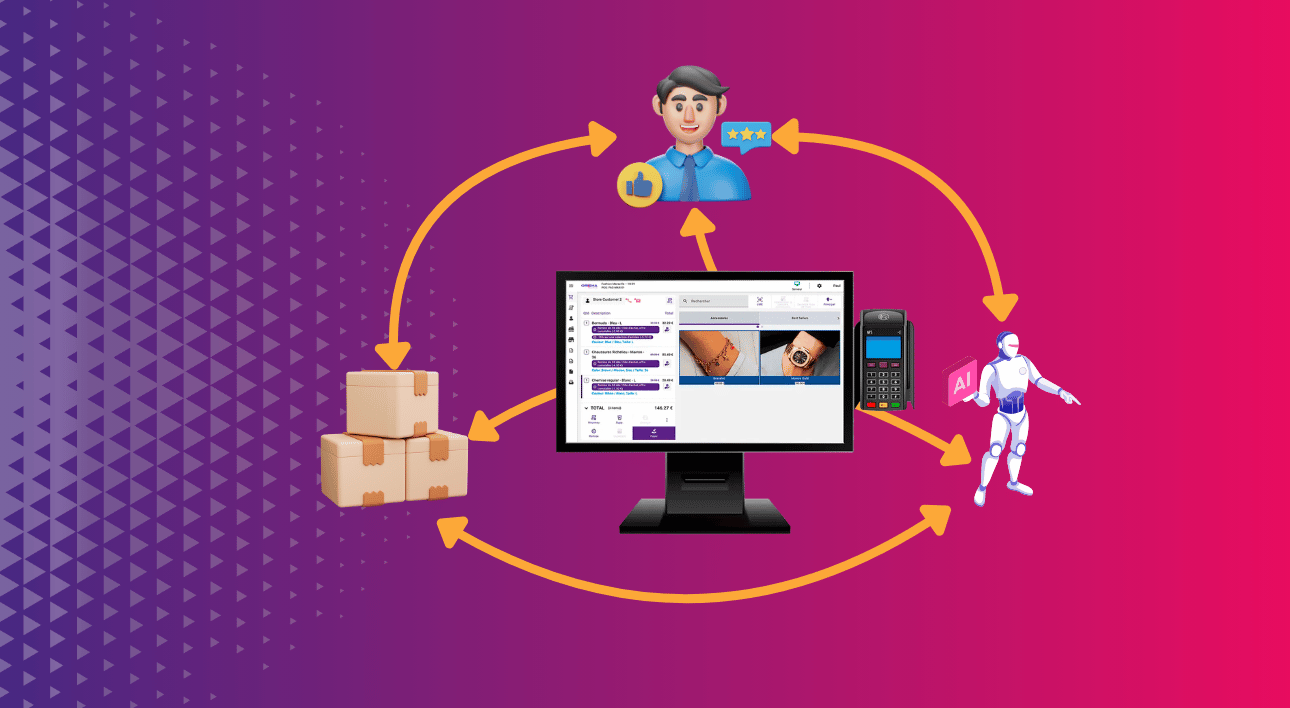
Gartner’s research emphasizes that the modern POS is no longer just a checkout tool, but a foundational anchor for a unified architecture. In practical terms, this means it is tightly integrated with other platforms, ranging from the Order Management System (OMS) and Customer Relationship Management (CRM) tools to Shopify stores and the Internet of Things (IoT).
At the same time, POS software 2.0 is evolving into a real-time data hub, providing a unified view of available inventory, orders, and customers across all touchpoints. This 360-degree visibility allows for the consistent orchestration of various processes, such as in-store sales, Click & Collect, and Ship from Store.
Undeniably, the POS has established itself as the “brain” of a unified commerce landscape that is being reinvented by emerging trends and technologies.

Toward an agile POS: the three pillars of transformation
According to the Gartner Market Guide, the transition to a modern and agile POS is built on three primary pillars: MACH architecture, “channelless” experiences, and the reduction of the Total Cost of Ownership (TCO).
Greater agility with MACH architecture
In the retail sector, the monolithic architectures of a legacy system act as a major barrier to launching new omnichannel journey initiatives. In contrast, a MACH architecture allows businesses to add or replace specific components such as the POS without having to overhaul the entire system.
This modern software design approach, which enables the creation of flexible and easy-to-maintain solutions, is based on the four fundamental concepts that form its acronym:
- Microservices: the software consists of a suite of independently functioning services, making it possible to modify or improve any single part without disrupting the rest of the system.
- API-first: different components interact with one another (and with third-party solutions) through APIs, which encourages interoperability and seamless application integration.
- Cloud-native: cloud hosting makes it easy to scale storage and computing resources up or down according to the organization’s shifting needs.
- Headless: the front-end and back-end are decoupled, allowing for the use of distinct user interfaces across different platforms while relying on the same core system.
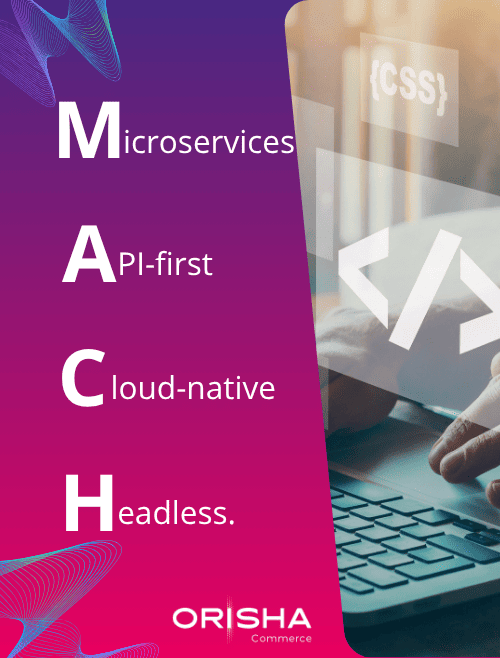
Consequently, shifting to a modular platform based on MACH architecture enables retailers to significantly increase their scalability and accelerate the rollout of new features, while delivering scalable, mobile-first, and omnichannel customer experiences.
Toward a “channelless” experience
Moving beyond omnichannel, retailers are now expected to provide a “channelless” experience, where customers move without friction from a mobile app to a website and then into a physical store.
Meanwhile, store teams are managing Click & Collect, Ship from Store, and even “endless aisle” scenarios, which allow customers to order out-of-stock items while in-store and have them delivered directly to their homes.
Unlike traditional POS platforms, a modern solution like Openbravo POS can implement a wide range of scenarios from reservations with partial payments to seamless product returns driven by a unified inventory and flexible order management.
This effectively bridges the gap between online and offline channels to create a truly channelless experience.

Controlled costs thanks to cloud-native technology
Traditional systems often require a high initial investment, coupled with ongoing expenses for maintenance contracts, personnel, hardware replacement, or physical facilities. This is without even considering the hidden costs of updates and system downtime, which often lead to a loss in productivity.
This highlights the value of adopting a cloud-native, modular, and agile solution that offers rapid deployment and predictable pricing, covering both infrastructure and maintenance. This allows the business to transition to a transparent operating expense (OPEX) model that scales alongside its growth.
The result is significant savings, particularly in terms of maintenance, which substantially lowers the Total Cost of Ownership (TCO) of the software.

AI and super-apps: the future of retail is already here
Artificial Intelligence is everywhere, and POS software is no exception. AI is now being integrated directly into POS solutions to support real-time decision-making, optimize inventory management through predictive analytics, and drive higher customer engagement.
Unified commerce enters a new era with agentic AI
Agentic AI refers to an artificial intelligence system capable of mimicking human decision-making to solve problems, allowing it to achieve specific goals with minimal supervision.
When applied to retail, agentic AI can, for example, continuously monitor stock levels, customer buying behaviors, and the organization’s operational constraints.
Even more impressive is its ability to automatically trigger actions within checkout and order management systems without requiring human intervention.
Beyond automating numerous complex tasks for a sales associate, AI also assists them in quickly finding necessary information or personalizing offers on the spot.
In the future currently taking shape, an increasing number of decisions will be made by autonomous agents capable of acting directly through in-store tools, including the POS.
Empowering sales associates through super-apps
Alongside agentic AI, the retail sector is witnessing the emergence of new unified interfaces that combine POS, stock, orders, loyalty, and clienteling into a single screen.
These “super-apps” transform store employees into genuine experts in fulfillment and sales. There is no longer a need to switch between devices or systems; a single mobile POS terminal is all they need to manage all their tasks.
In practice, sales associates can easily check inventory, manage Ship from Store or endless aisle orders, reserve items, and offer cross-selling suggestions. They can even interact with AI agents to receive instant recommendations.
To go further, discover how dynamic allocation helps optimize product availability.
The conclusion is clear: the POS is becoming the nerve center of a truly unified commerce platform, enhanced by agentic AI and super-apps. Retailers are facing a definitive turning point; now more than ever, adopting modern and agile POS software is essential to stimulate innovation and generate growth.
Featured for the second consecutive year in the Gartner Market Guide, Openbravo POS is modular, cloud-native, and AI-ready software designed to help retailers deliver unified, channelless experiences while reducing costs.
FAQ
What features should I look for in a modern POS system?
Essential features of a modern and agile POS system include order and inventory management, real-time analytics and dashboards, embedded AI, clienteling and loyalty management, flexible or offline payments, and seamless integration with ERP, CRM, or IoT. This allows the POS to fulfill its role as the “brain” of a unified commerce strategy.
How does Openbravo software work for unified commerce?
Openbravo POS is a comprehensive unified commerce software that enables retailers to manage in-store and online transactions consistently and smoothly by centralizing sales operations across different channels. It also integrates tools to track sales, manage inventory, and analyze commercial performance.
Openbravo POS harmoniously brings together physical and online commerce in a powerful, fluid, and intuitive multi-brand SaaS solution. With our POS system, your stores remain connected, scalable, and always ready to stay ahead of the market.
How does the Gartner Market Guide help businesses?
The Gartner Market Guide for unified commerce platforms anchored by AI-based POS software assists companies by providing detailed analysis and strategic recommendations tailored for decision-makers. This report helps organizations better understand global retail market trends, identify high-performing solution providers, and optimize their strategies in line with industry shifts.
How does a unified commerce system work?
A unified commerce system works by integrating all sales, inventory, and customer data into a single platform. This allows merchants to synchronize information between physical and online touchpoints, ensuring real-time stock visibility, a consistent customer experience, and a high level of service.