

Retail software and store management: how to choose the best solution

Store management has changed radically in recent years. Controlling sales within the physical channel is no longer enough; today, it is vital to unify channels, optimize processes, and understand your customer deeply. In this context, choosing the right store management software becomes a major strategic decision that directly impacts business profitability and growth.
What is retail and store management software?
Retail software is a technological solution designed to centrally manage all commercial business operations. It integrates key features such as sales management, inventory management, order management, customer relationships, discounts and promotions, and interactions across the digital channel.
Unlike siloed tools, modern retail software connects all processes within a single platform. This allows businesses to rely on data updated in real time and avoid errors caused by disconnected systems.
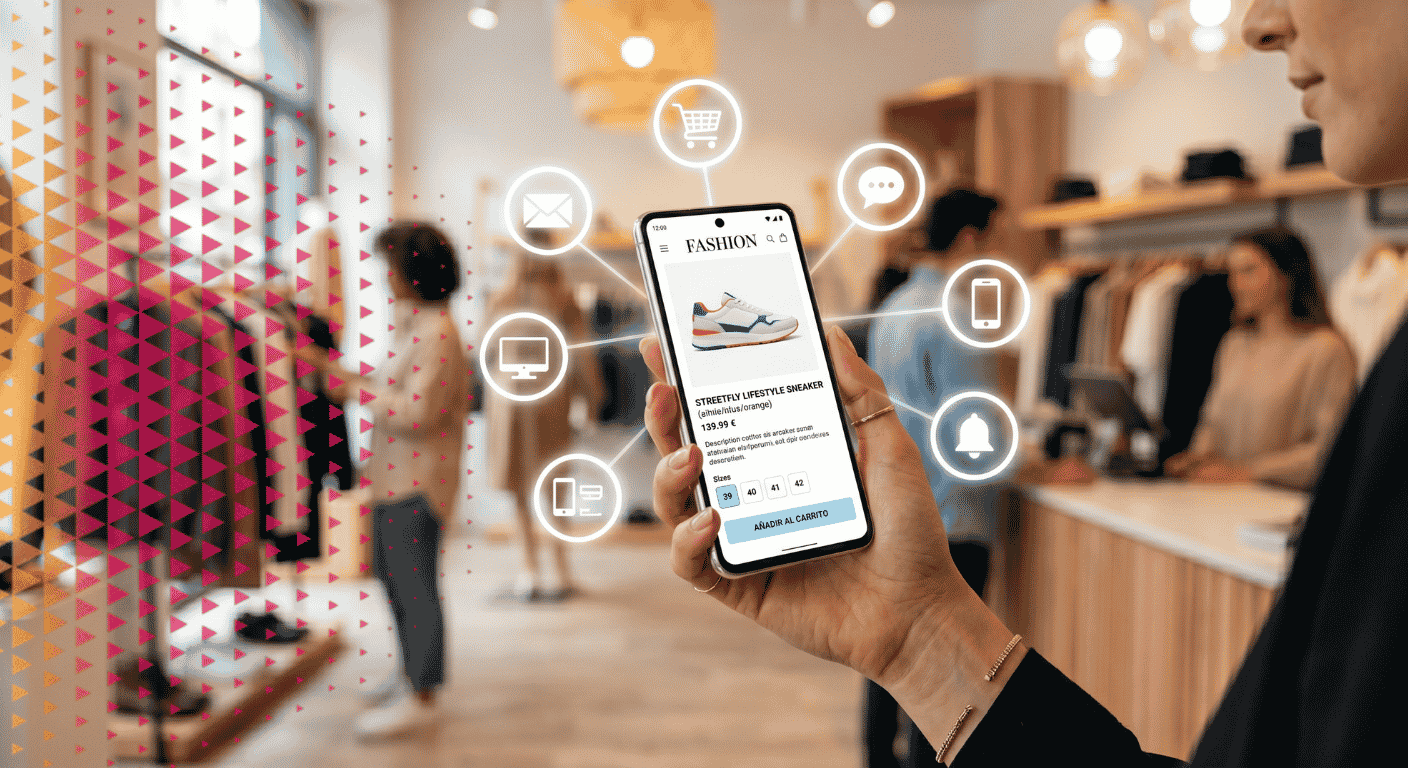
Furthermore, today’s retail software is fully aligned with a unified commerce approach, integrating the physical channel, e-commerce, and other touchpoints into one single solution. This approach streamlines operations and guarantees a better customer experience.
Benefits in terms of efficiency, costs, and scalability
Store management software delivers concrete benefits to day-to-day operations. Here are the most relevant ones:
- Increased operational efficiency: It automates time-consuming tasks like stock updates, invoicing, or order tracking, thereby reducing errors and time spent on manual processes.
- Reduced costs: It helps prevent overstocking, detect low-turnover products, and optimize procurement, directly improving business profitability (by optimizing costs).
- Business scalability: The platform adapts to the company’s growth rate without requiring a system change, making it easy to expand the business (thanks to its scalability) into new channels or markets.
The different types of retail software
There are several types of retail software depending on the nature of the business and its complexity. Choosing the right solution is essential to achieving real results.
Software for fashion stores and retail
Clothing store software is specifically designed to handle unique attributes like size grids, colors, or collections. This type of solution allows businesses to track store inventory with high precision and optimize product turnover.
In the broader retail sector, these solutions also include tools for managing promotions, loyalty programs, and customer data analysis. All of these features help enrich the customer experience and increase the average basket size.
E-commerce software and omnichannel strategy
While e-commerce software allows you to manage the digital channel, its true value is unlocked when interconnected with the physical channel.
An omnichannel journey provides a seamless experience, such as buying online and picking up in-store (Click & Collect) or managing returns / refunds across any channel. To achieve this, retail software must rely on real-time stock visibility and seamlessly synchronize order and customer data.
Essential features of store management software
For management software to be fully effective, it must cover key business activities and simplify daily decision-making. Here are the must-have blocks:
- POS software: Essential for managing transactions within the point of sale (POS). It must be fluid, reliable, and compatible with multiple payment methods / options to ensure a fast checkout / checkout experience for both customers and store teams.
- Inventory management: It ensures accurate tracking to prevent errors, manage replenishments, and offer full visibility of available inventory across every point of sale (POS).
- Customer data analysis: It generates detailed reports on sales, shopping behavior, and product performance. This is a major lever for making informed decisions and optimizing commercial strategy.
How to choose retail software based on your profile
Choosing retail software is not a one-size-fits-all decision, as each department within the company has specific needs. Therefore, it is crucial to analyze three fundamental pillars before deciding:
- Technology: The software must feature scalability, security, and ease of integration with the existing ecosystem, enabling you to centralize information and support business growth.
- Operations: The tool must streamline order management, inventory management, and replenishments, limiting manual tasks to boost daily operational efficiency.
- Customer experience: It is paramount that the solution delivers personalized shopping experiences that are consistent across all channels, which strengthens engagement and optimizes customer relations.

The importance of omnichannel in retail
Omnichannel is now one of the pillars of modern commerce. Consumers expect to interact with a brand fluidly through a seamless experience, regardless of their chosen channel.
Retail software capable of connecting all touchpoints guarantees a harmonious customer experience. Additionally, it simplifies internal operations by centralizing data flows. This not only maximizes customer satisfaction but also drives sales opportunities and overall business productivity.
The role of a retail technology partner
Teaming up with a retail technology partner is essential to successfully deploying store software and unlocking true added value. The challenge goes beyond mere technical installation; it involves shaping the tool around your processes, unifying channels, and actively supporting your commerce journey.
That is why, at Orisha Commerce, we advocate for a vision rooted in unified commerce, where technology, operational excellence, and customer experience converge. Our value proposition goes far beyond software: it encompasses tailored strategic guidance, smooth system integration, and continuous improvement.
A choice retail technology partner brings you:
- Deep industry expertise to configure the solution based on your specific business requirements.
- Smooth deployment and integration with your existing tools (POS software, e-commerce, OMS (Order Management System), etc.).
- Technical support and scalable guidance to grow without friction and continuously adapt to changing market shifts.
Choosing the right partner makes all the difference between adopting a standard IT tool and setting up a genuine growth lever for your business.
Orisha Commerce, technology driving retail performance
At Orisha Commerce, we design retail software solutions founded on unified commerce. Our platform centralizes the management of physical points of sale, e-commerce, and other channels within a single environment, grouping all strategic business data: sales, customers, inventory management, and order management.
Relying on high-performance solutions like Openbravo Commerce Cloud enables companies to benefit from comprehensive store management software that integrates POS software, inventory management, order management (OMS), analytics tools, and loyalty programs. This drives enhanced operational agility and a consistent omnichannel journey, perfectly matching new consumer expectations.
Our approach goes beyond the purely technical scope. We position ourselves as a true retail technology partner, guiding businesses throughout their growth and digital transformation.
Si vous recherchez un logiciel de gestion de magasin capable d’optimiser vos processus, de sublimer l’expérience client et de propulser votre activité vers de nouveaux sommets, nous vous invitons à découvrir l’étendue de nos solutions et à demander une démonstration personnalisée.
FAQ
What is store management software?
It is a technological tool that centralizes the management of sales, available inventory, customer relations, orders, and daily operations for a business across both the physical channel and the digital channel.
What are the benefits of retail software?
Retail software optimizes a company’s operational efficiency, automates manual tasks, allows better control over costs, and simplifies strategic decision-making thanks to reliable, real-time data on sales, inventory management, and buying behavior.
Is this solution suitable for small businesses?
Absolutely. Although frequently associated with large retail chains, this type of software is highly valuable for independent shops. It helps structure processes, eliminate data entry errors, save valuable time, and stay competitive in an increasingly digital market.
What should fashion store software include?
It must include the management of variants (sizes, colors, collections), store inventory, sales, discounts and promotions, as well as product performance analytics. Additionally, tracking real-time stock visibility by store and channel is recommended to prevent stockouts or overstocking.
Why has omnichannel become essential?
Because it unifies all your sales channels to deliver a omnichannel journey through a seamless experience. Consumers can easily buy online, opt for Click & Collect, check available inventory beforehand, or handle their returns / refunds in-store smoothly.