

Omnichannel strategy, a complete guide to improving experience and efficiency
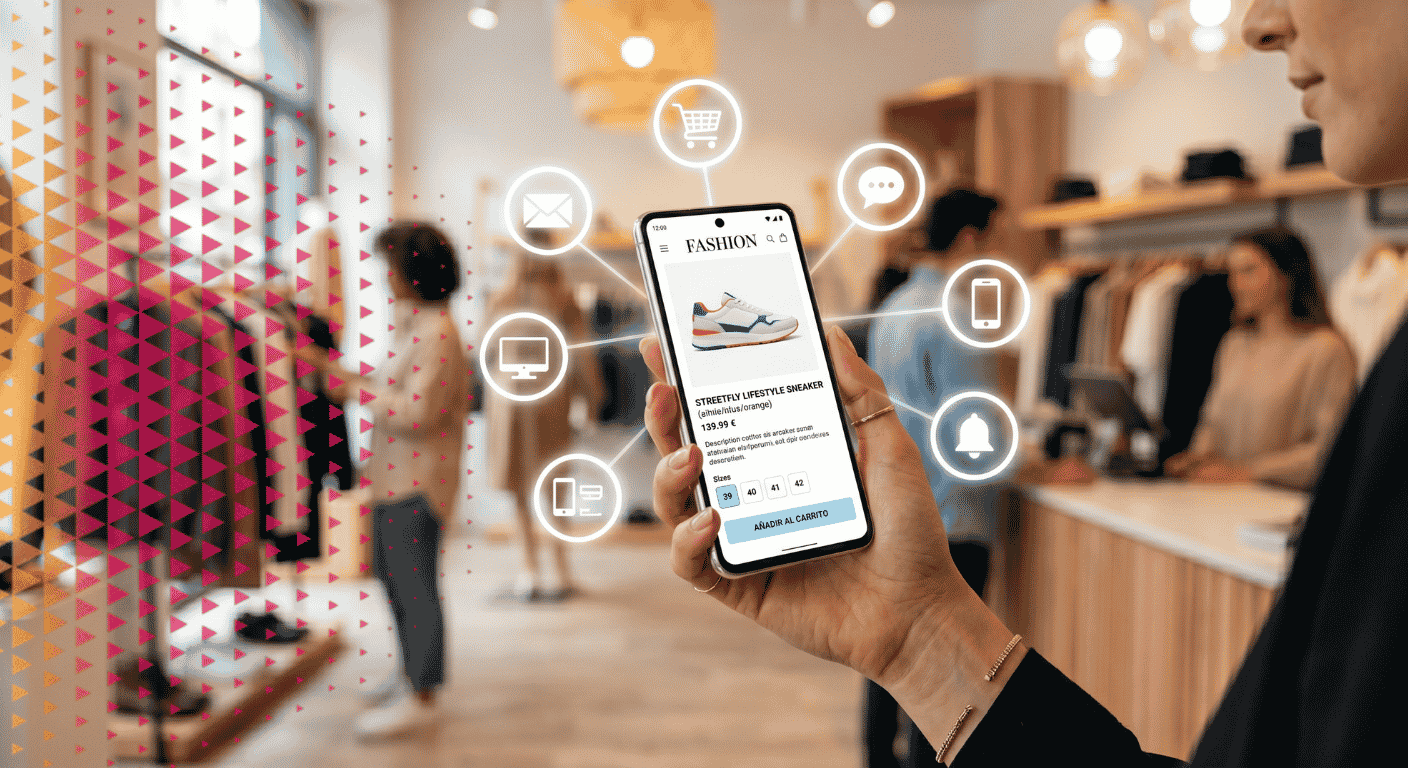
In today’s highly digitalized and competitive market, companies can no longer afford to ignore the fact that the customer is hybrid. Today’s consumer naturally jumps from mobile to physical stores, comparing and deciding in real time. Therefore, implementing an omnichannel strategy is not just an added value, but an absolute priority to guarantee a flawless user experience and optimize internal operations. Discover everything you need to know about the omnichannel journey in this post prepared by Orisha Commerce.
What is omnichannel and why does it matter
Omnichannel is an approach that connects all communication, sales, and service channels so that they function as a single integrated system. Its goal is to allow the customer to interact with the brand without interruptions, regardless of the channel they use at any given time. In practice, this implies that information is always up to date and accessible across all touchpoints. This is why today’s omnichannel customer expects continuity. For example, they might start a purchase online and finish it in-store, or research a product on social media and purchase it via an app. Therefore, companies must ensure that information, pricing, and the experience remain consistent at all times.
Difference between multichannel and omnichannel
Although they may seem similar, the difference is best understood by looking at how each model operates:
Multichannel strategy:
- The company is present on several channels (store, web, social media).
- Each channel operates independently.
- Data is not shared between channels.
- The experience may vary depending on where the customer interacts.
Omnichannel journey:
- All channels are interconnected.
- Information is shared in real time.
- The customer can switch channels without losing continuity.
- The experience is coherent and uniform across all touchpoints.
For example, in a multichannel approach, a product might have a different price in-store versus online; in contrast, in an omnichannel model, the price, available inventory, and information are the same across all channels.
Benefits of an omnichannel experience for your company
Adopting an omnichannel customer experience not only improves customer satisfaction but also directly impacts business results. In fact, various studies in the retail sector show that omnichannel consumers have a higher Customer Lifetime Value and a higher purchase frequency.
Loyalty and customer retention
One of the main benefits is omnichannel loyalty. When the customer perceives a fluid and personalized experience, their trust in the brand increases. This translates into higher retention and long-term relationships.
Furthermore, the ability to interact consistently across different channels strengthens the emotional bond. For instance, receiving personalized recommendations based on previous purchases improves the perception of value.
Increasing ROI and brand consistency
Another key aspect is the impact on Return on Investment (ROI). An omnichannel strategy allows for campaign optimization, improved segmentation, and reduced operating costs.
Likewise, brand consistency across all channels reinforces corporate identity.
On the other hand, data integration facilitates decision-making based on real information, which increases efficiency and reduces errors.
Improving decision-making
As mentioned in the previous section, the availability of unified data allows for more accurate analysis of omnichannel customer behavior. This makes it easier to identify purchasing patterns, preferences, and friction points, helping to continuously improve the strategy.
Greater competitiveness in omnichannel retail
In an increasingly demanding market, companies that adopt an omnichannel retail model gain a competitive advantage. They not only respond better to consumer expectations but also adapt more quickly to market changes.
Omnichannel solutions and platforms
To implement an effective omnichannel strategy, it is essential to have solutions that integrate technology, data, and processes. These tools allow you to connect all touchpoints and offer a uniform experience.
Key technologies for CIOs and COOs
IT leaders should invest in unified commerce platforms in the Cloud capable of centralizing all commercial activity, natively connecting the physical point of sale (POS) with order management. These solutions ensure a single view of prices, stock, and customers through real-time integration. Likewise, the use of artificial intelligence and advanced analytics makes it possible to anticipate needs and improve personalization. This is key to optimizing the customer experience.
Omnichannel management and logistics
Omnichannel logistics is one of the fundamental pillars to guarantee a satisfactory experience. Poor management in this area can lead to delays, errors, and a loss of trust.
Optimizing operations and costs
System integration allows for optimized omnichannel management, reducing operating costs and improving efficiency.
For example, centralized inventory management prevents stockouts and overstocking.
Additionally, the automation of logistics processes contributes to reducing delivery times and improving customer satisfaction.
Coordination between franchises and stores
In environments with multiple points of sale, coordination is key. An omnichannel strategy allows all stores and franchisees to operate under the same criteria, guaranteeing consistency and efficiency. This facilitates, for example, Click & Collect for online orders or returns at any point of sale.
Designing the omnichannel customer journey
The omnichannel journey must be carefully designed to ensure a seamless experience and personalization at every interaction.
Integrating online and offline channels
Channel integration is vital as it serves to remove barriers between the digital and the physical (“phygital”). For example, allowing a customer to check real-time stock visibility in-store from the website significantly improves the experience. Furthermore, this integration facilitates continuity in the purchasing process, regardless of the channel used.
Personalization and experience tracking
Personalization is one of the key factors in the omnichannel experience. Using data to offer relevant recommendations improves satisfaction and increases the likelihood of purchase. Likewise, customer tracking allows for the identification of improvement points and the continuous optimization of the journey.
Measurable results in experience and efficiency
A well-implemented omnichannel strategy allows for precise measurement of results. Indicators such as conversion rate optimization, delivery times, or customer satisfaction offer valuable information for improvement.

How to implement your omnichannel strategy step by step
Implementing an effective omnichannel strategy is not just a matter of technology, but of coordination, analysis, and constant evolution. To achieve real results, it is important to follow a series of key steps:
- Define clear objectives from the start: establish what you want to improve (sales, customer experience, operational efficiency) and align all teams in that direction.
- Choose the right tools: invest in retail SaaS platforms that allow for the integration of data, channels, and processes into a single system.
- Foster internal collaboration: coordination between technology, marketing, and operations is essential for the strategy to function coherently.
- Train the teams: ensure that all departments understand and correctly use the implemented platforms and processes.
- Measure results constantly: analyze key indicators such as conversion, retention, or delivery times to evaluate performance.
- Apply continuous improvement: identify opportunities, correct errors, and adjust the strategy to optimize results in the long term.
Orisha Commerce: unified commerce solutions to boost your business
At Orisha Commerce, we work every day to help retail and distribution companies improve their omnichannel management in a real and measurable way. Our unified commerce solutions are designed to integrate all channels, optimize omnichannel logistics, and offer a coherent and efficient customer experience at every touchpoint.
Furthermore, we focus on innovation and efficiency as the foundation for adapting to an increasingly digital environment, where agility and responsiveness make the difference.
If you have made it this far, you surely already know that omnichannel is not an option. It is the next step. And we can help you take it meaningfully, without complications, and with results. Visit our website now and contact us to learn more about how we work.
FAQ
What is an omnichannel strategy and how does it improve the customer experience?
An omnichannel strategy integrates all channels (store, web, app, social media) to offer a seamless experience. This reduces friction, improves the customer experience, and increases conversion.
What is the difference between multichannel and omnichannel in retail?
Multichannel manages channels separately, while omnichannel retail connects them into a single system. This achieves unified omnichannel management and a consistent experience across all points.
What benefits does omnichannel loyalty bring to companies?
Omnichannel loyalty improves retention, increases customer value, and encourages repeat purchases. Additionally, it reduces acquisition costs and strengthens the relationship with the brand.
What omnichannel solutions and platforms does a company need?
A company needs a CRM, an ERP, and an omnichannel platform that integrates data, orders, and stock. This allows for the optimization of management, logistics, and operational efficiency.