

ReCommerce in retail: profitable circular economy scenarios for your brand

Recommerce as a driver of the circular economy in modern retail
As climate change continues to reshape our consumption habits, the retail industry is at the forefront of today’s environmental challenges:
- Combating the waste generated by millions of unsold or prematurely discarded products every year.
- Limiting the depletion of resources (raw materials, water, energy, etc.) that are consumed in massive quantities.
- Reducing the carbon footprint associated with product manufacturing, transport, and distribution.
While some retailers have already adopted more sustainable models on their own initiative, industry players will eventually need to embrace this shift as regulatory pressure intensifies. In fact, legislation regarding recycling, sustainable development, and waste management is becoming increasingly common at both national and European levels.
Beyond mere compliance, the transition toward a more virtuous retail model addresses a growing demand from consumers themselves. Younger generations, in particular, prioritize responsible brands capable of giving products a second life.
Within this context, Recommerce and second-hand sales represent a major opportunity for the sector, especially as the second-hand, repair, and rental markets continue to surge.
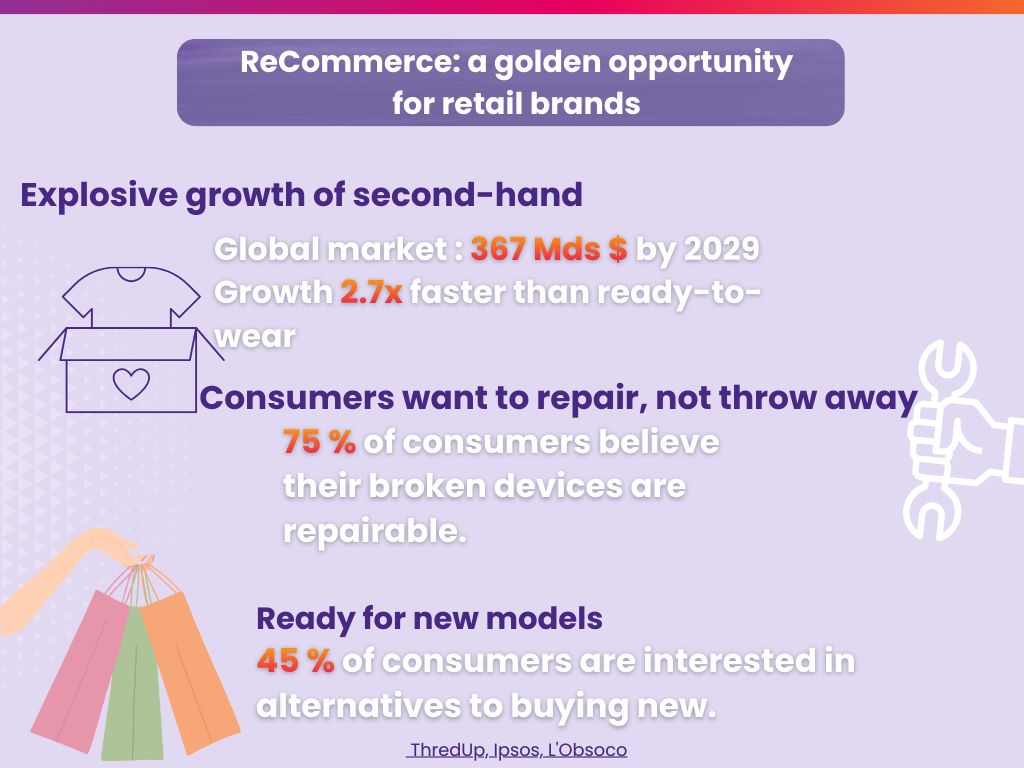
The global second-hand clothing market is projected to reach $367 billion by 2029, growing 2.7 times faster than the global apparel market.
75% of consumers in France believe that a significant portion of their broken electrical appliances could be repaired.
45% of French consumers show a strong interest in retail alternatives to owning brand-new products.
Therefore, the circular economy is no longer just an option; it is a strategic necessity for a retail sector in search of sustainability, credibility, and profitability.
Better still, it can become a genuine competitive advantage and a driver of profitability for businesses that know how to capitalize on it.
Chapter 1: The fundamentals of the circular economy
1. Moving beyond the linear model: toward a circular economy
The circular economy is an economic system designed to use resources more efficiently while reducing the environmental impact of producing and exchanging goods.
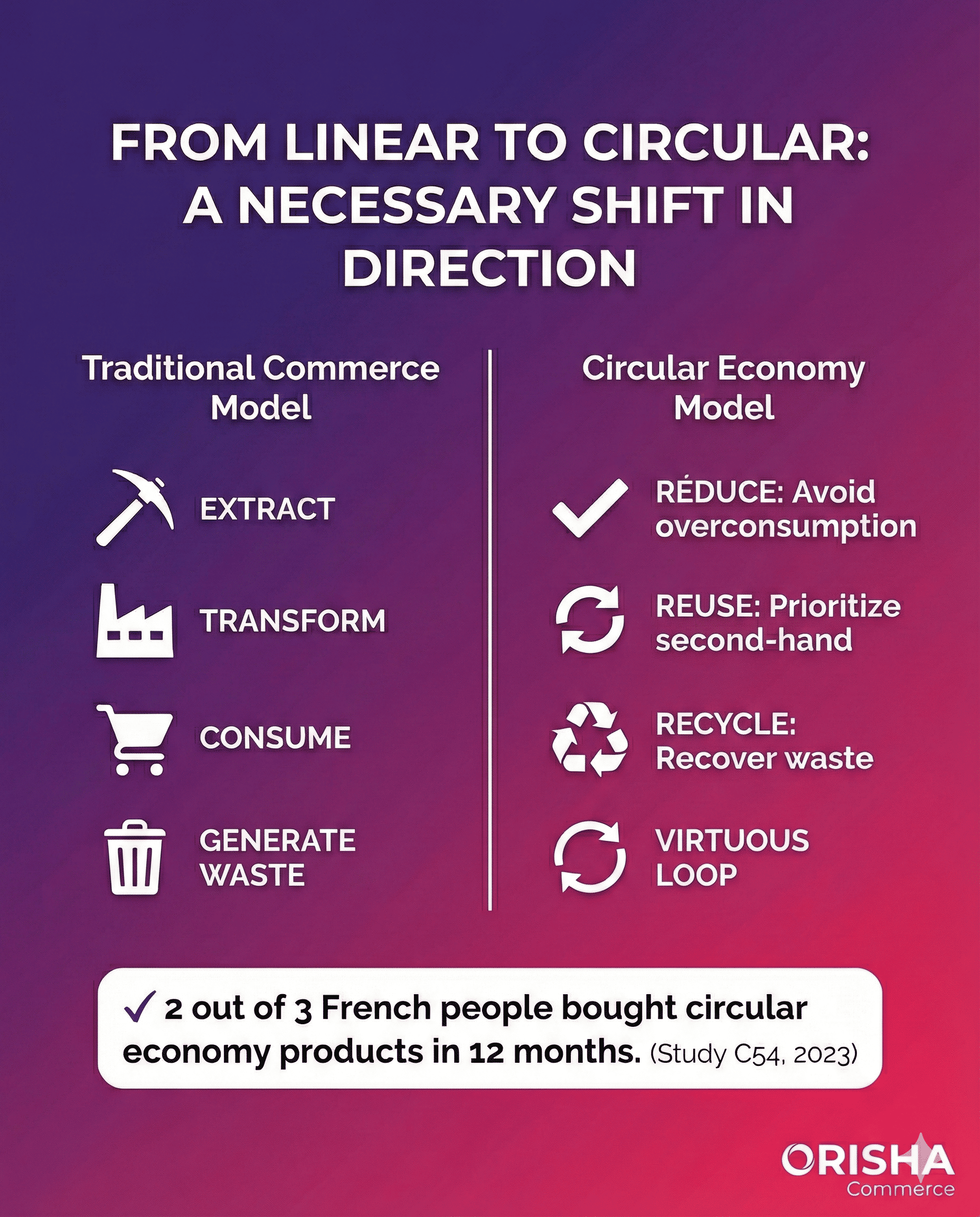
This approach stands in direct contrast to the linear model
- Extract
- Transform
- Consume
- Generate waste
In a circular system, waste is minimized (if not eliminated entirely) by extending product lifespans. Furthermore, discarded items can be reused as raw materials to design new products.
2. The core principles (Reduce, Reuse, Recycle, Repair)
The circular economy is built on three fundamental pillars:
- Reduce: Avoiding overconsumption by purchasing only what is necessary.
- Reuse: Prioritizing second-hand items or repairs over buying new products.
- Recycle: Manufacturing new products by upcycling waste.
3.Opportunities and challenges for retail
While aligned with environmental goals, the circular economy also serves as a response to rising consumer demand. According to a 2023 CSA study, two out of three people in France claim to have purchased circular economy products within the last 12 months.
Nevertheless, implementing a circular economy still faces several obstacles, particularly for retail businesses:
- The cost of recycled raw materials often remains higher than that of new materials. In sectors where price competitiveness is crucial, this gap can deter companies from adopting circular models.
- Although responsible consumption practices are growing, they are not yet deeply rooted in all consumer segments. Furthermore, criteria such as price often remain the priority at the point of purchase.
- Finally, companies may lack a clear understanding of the legislative framework surrounding the circular economy.
Despite these challenges, the circular economy offers significant long-term opportunities, ranging from reduced waste management costs and resource optimization to an improved brand image.
Chapter 2: Recommerce and second-hand: a new standard for brands
1. What is Recommerce?
Recommerce refers to the buying and selling of used, refurbished, or returned products through digital or physical channels. Beyond second-hand sales, this concept extends to other circular practices such as rental or repair.
Within a circular economy framework, Recommerce helps extend product lifecycles, encourages reuse, and reduces waste. Given the growing focus on sustainability, it is a winning strategy for both consumers and retail businesses.
2. Recommerce vs. second-hand: definitions and differences
Recommerce can take various forms depending on the products and the digital or physical channels used. We can distinguish three main models that often complement one another: second-hand, rental, and repair.
Second-hand refers to the resale of used products, often after they have been curated and authenticated to provide consumers with high-quality, affordable alternatives to new items.
It also includes “refurbished” goods, used products restored to high-quality standards before being sold again. Companies choosing this model can refurbish products in-house, much like Apple does with its Certified Refurbished store.
This approach enables brands to:
- Manage the entire end-to-end process.
- Maintain strict quality control, ensuring that used items meet brand standards before being resold.
- Streamline operations and maximize the value of used products.
Specialized marketplaces for refurbished goods have emerged in recent years, including Back Market (a pioneer and current leader in France), Recommerce.com, and Easy Cash, to name a few.
As consumers seek to balance responsible consumption with purchasing power, rentals are becoming a prominent alternative to traditional sales:
- Short-term rental is an attractive option for customers needing a product for a limited time, such as fashion items, tools, or equipment for specific events. It allows consumers to access quality products without a long-term purchase commitment. Ultimately, short-term rentals promote a more sustainable economy by preventing the purchase of items that might only be used once.
- Long-term rental, meanwhile, allows consumers to lease everyday goods on a monthly or annual basis. Well-known in the automotive sector, this model is now spreading to categories like furniture, appliances, and sports equipment.
Consequently, rental is a flexible and economical solution, ideal for meeting occasional needs. Furthermore, it makes premium products more accessible to consumers deterred by high retail prices.
Retailers also benefit from this trend as it increases foot traffic in physical stores, thereby boosting overall sales potential.
Repair is another essential component of Recommerce and the circular economy, involving the restoration of damaged products to extend their lifespan. By offering repair services, retail companies not only reduce waste but also create additional revenue streams through the services provided.
3. Business and CSR benefits for brands
Building customer loyalty through responsible commitment
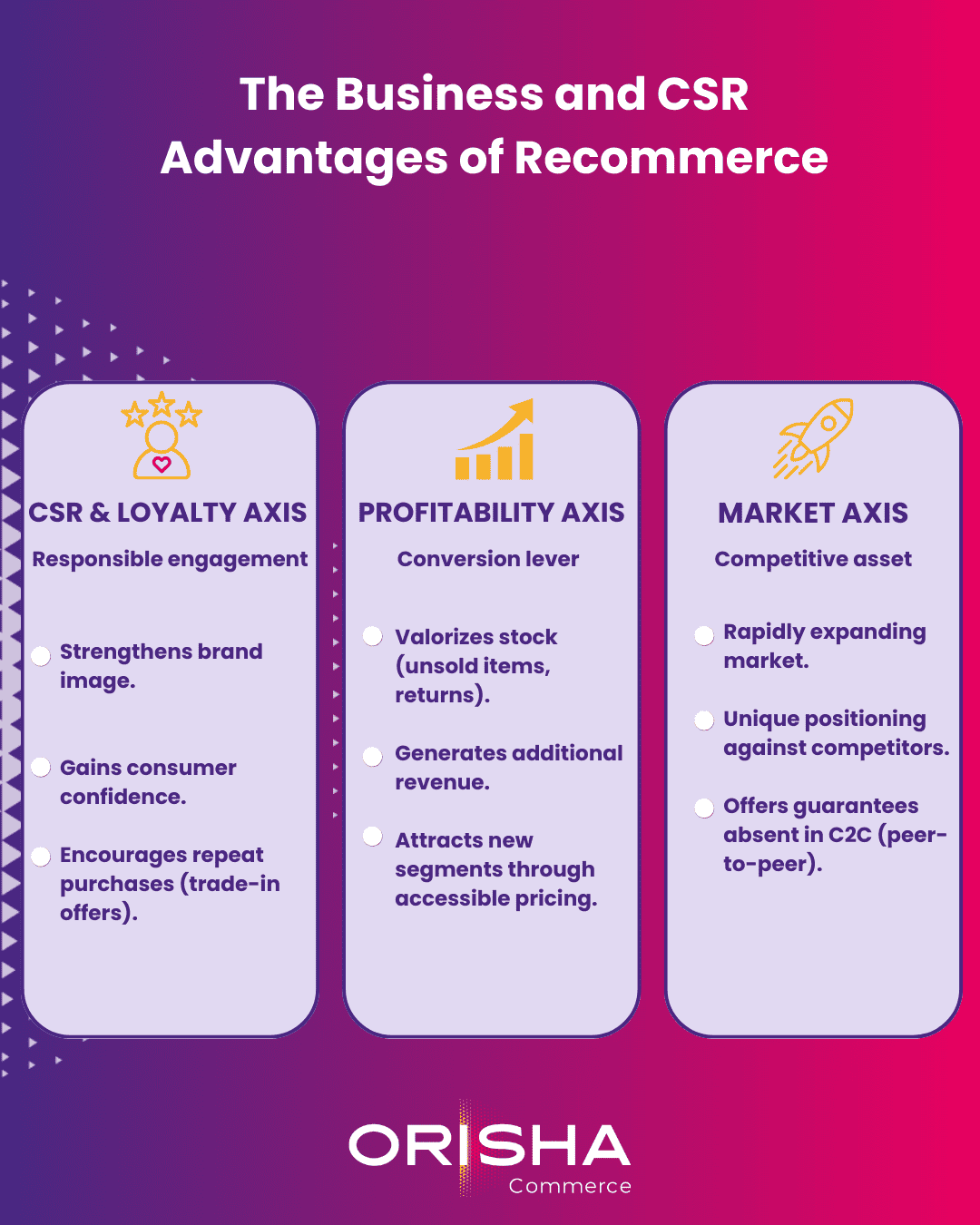
In the face of rising environmental awareness, Recommerce allows retailers to strengthen their brand image and earn the trust of eco-conscious shoppers.
Furthermore, customers who have already purchased new products are more likely to engage with trade-in or refurbished offers, which drives repeat purchases and Loyalty.
A driver for profitability and conversion
Recommerce optimizes the value of Available inventory by giving a second life to unsold, returned, or slightly damaged products. Instead of absorbing the Costs associated with return management or product destruction, retailers can generate additional revenue.
Additionally, second-hand items offered at accessible price points appeal to budget-conscious customers. The results include a higher Conversion rate optimization and the ability to reach new consumer segments.
A rapidly expanding market
By integrating Recommerce into their strategy, retailers have the opportunity to establish themselves in a high-growth market that remains largely untapped by most brands.
This approach provides a unique competitive edge. While C2C second-hand platforms have seen explosive success, they offer few consumer guarantees regarding returns or exchanges.
This leaves the door wide open for established brands to fill the gap and develop new offerings across all sectors, from apparel to home improvement and high-tech products.
Chapter 3: Implementing an effective Recommerce strategy
1. Analyzing customer needs and expectations
Before launching into Recommerce, a thorough analysis of industry trends is essential. To make informed decisions, you must examine:
- Market size.
- Growth forecasts.
- Key competitors.
- Emerging opportunities.
Furthermore, it is vital to understand your target consumers and their behaviors. Is there sufficient demand for the used goods, rentals, or repair services you plan to offer? Does your offer meet a genuine consumer need?
Finally, retailers must objectively assess their own strengths and weaknesses, particularly their ability to handle logistics and return management effectively.
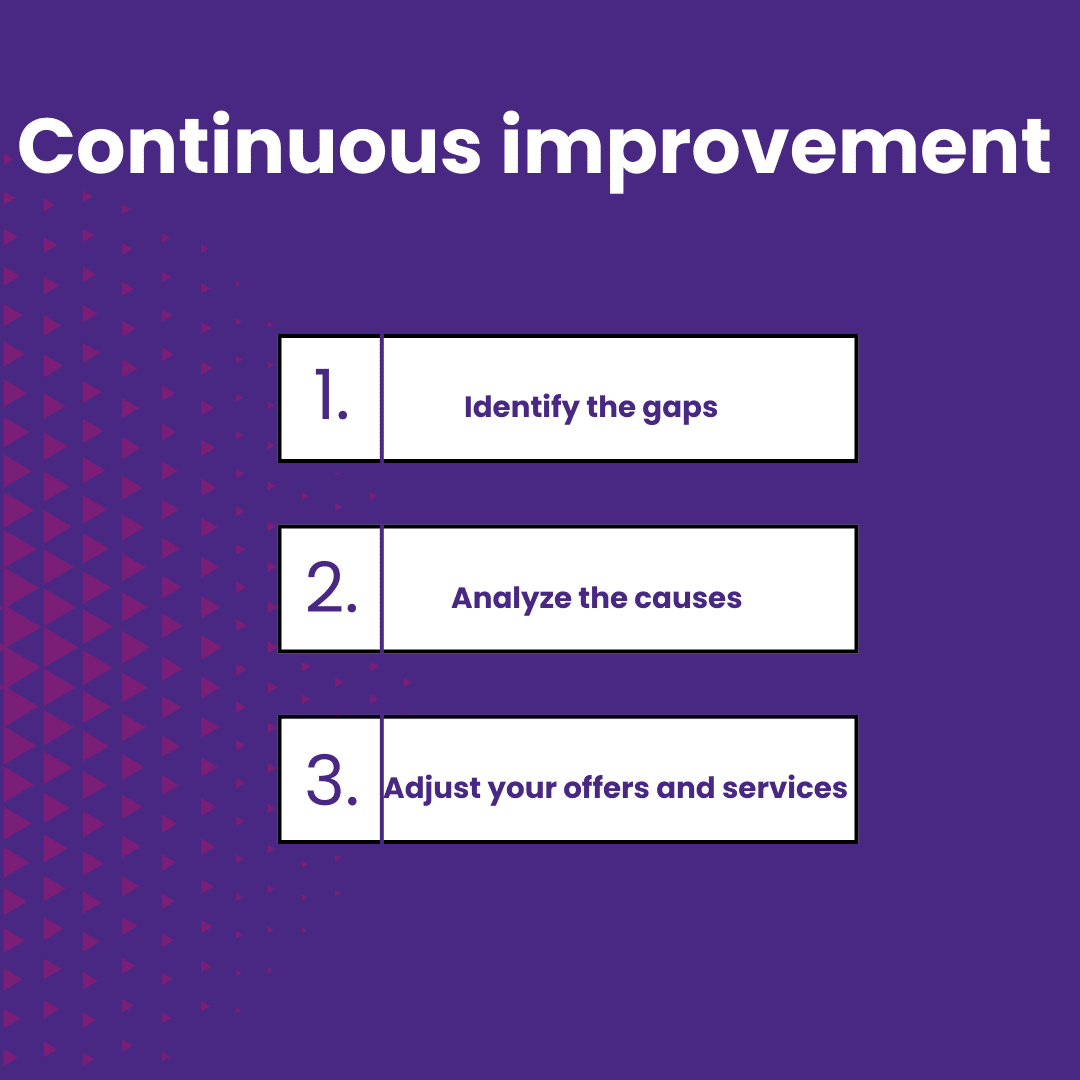
Once the preparatory work is complete, it is time to select a suitable Recommerce model.
Whether you choose second-hand resale, repair, or rental depends on various factors, starting with your industry, as some models align better with specific product types than others.
Most importantly, listen to your consumers by leveraging your earlier analysis; their expectations are the best indicators of which models are most relevant.
In fact, second-hand, rental, and repair can even be combined, but it is often better to proceed step-by-step, testing circular practices on a small scale. The key is to refine and adapt your strategy over time.
Recommerce must be fully integrated into your retail operations, requiring a deep rethink of company logistics. This reorganization is vital for managing:
- Returns / Refunds.
- Product sorting.
- Refurbishment.
- Reintegration into the available inventory.
- Pricing management.
- Online listing.
Ensuring product quality is paramount, which is why strict quality control measures must be established.
From a customer perspective, simplifying the process through Click & Collect or in-store drop-offs creates a Seamless experience. This leads to positive engagement and encourages deeper customer participation in the circular economy.
4.Collaborating with the right partners (marketplaces, repairers, circular startups)
When navigating the second-hand market, some retailers choose to sell directly through their own digital platforms, integrating refurbished and used items seamlessly alongside their new inventory.
Alternatively, many brands opt to partner with specialized resale marketplaces; this strategy offers a fast track to visibility and market reach without the technical overhead of developing a separate, dedicated e-commerce site for pre-owned goods.
The same applies to repairs:
- Retailers can build internal Repair workshops to manage the entire process.
- Alternatively, they can partner with specialized external providers. This strategy is often more cost-effective for companies lacking the specific infrastructure or expertise to manage repairs in-house.
Chapter 4: Integrating Recommerce into unified commerce
Recommerce involves managing second-hand inventory and returns alongside new product stock. This is why it is inseparable from Unified commerce, which is characterized by total synchronization between physical and digital channels.
Unified commerce relies on a centralized database shared across all sales channels (e-commerce, stores, marketplaces, mobile apps, etc.). This approach enables Real-time integration for collecting and analyzing data reliably.
Key benefits include:
- Automatic synchronization of stock, prices, and orders, reducing errors and stockouts.
- Unified, duplicate-free data integrated with other IT systems.
- A consolidated view of customers, products, and sales for precise management.
Within the ReCommerce landscape, leveraging customer data, including preferences, behaviors, and expectations, allows retailers to tailor their offerings and recommend the right products at precisely the right moment, serving as a powerful engine for Personalization. Furthermore, enriched Product references, complete with detailed descriptions, photos, videos, and customer reviews, greatly enhance transparency and consumer trust.
Beyond the storefront, centralizing this data streamlines logistics and fosters the adoption of sustainable practices. This unified data approach makes it far easier to offer circular alternatives like second-hand, repair, or rental services, all while delivering a fluid and consistent Customer experience.
Recommerce redefines the Customer experience, from discovery to long-term loyalty. Combined with new products, it offers an attractive alternative: two out of three people in France consume used goods or plan to.
Unified commerce enables hybrid journeys that ensure a fluid experience:
- Click & Collect to simplify store pickups.
- Real-time stock visibility online or in-store.
- Easy returns at any Point of sale (POS).
However, a significant hurdle remains: many buyers are still wary of potential defects and the perceived lack of protection when purchasing second-hand goods. To alleviate these concerns, ReCommerce must prioritize the following:
- A highly available and responsive customer service team,
- Solid guarantees regarding Returns / Refunds and exchange policies.
Ultimately, ReCommerce is far more than just a supplementary product line; it fundamentally redefines the relationship between brands and consumers by combining convenience, transparency, and trust.
In Recommerce, every item is unique, which complicates Inventory management.
A unified stock solution solves this by integrating online and offline inventories in real-time. Furthermore, because each product may show specific wear, retailers must define rigorous return processes, including careful inspection, refurbishment, and efficient restocking.
Furthermore, because each pre-owned item may exhibit unique signs of wear, retailers must establish rigorous workflows for handling Returns / Refunds, including:
- A meticulous inspection of all returned items.
- Refurbishment or reconditioning whenever necessary.
- Fast and efficient reintegration into Available inventory.
To achieve this level of precision, it is essential to leverage the right technology, starting with a robust Inventory management solution integrated within a Unified commerce system.
By bridging the gap between physical and digital shopping worlds, an Omnichannel journey provides the essential flexibility that ReCommerce requires. Services such as Click & Collect or in-store returns create a Seamless experience; for instance, an item purchased online can be easily returned to a physical shop, and vice versa.
Beyond the reach of e-commerce, the role of the physical Point of sale (POS) remains vital. In fact, dedicating specific in-store space to pre-owned goods is often a cornerstone of a successful ReCommerce strategy.
For example, Fnac offers in-store trade-ins for high-tech products, books, and games, which are then resold across both online and offline channels. Customers can also initiate trade-ins directly through the brand’s website, reflecting a truly omnichannel approach to circular trade.
Orisha Commerce solutions for managing Recommerce
Chapter 5: Operational challenges and marketing levers of Recommerce
ReCommerce entails managing both returns and second-hand inventory alongside new product stock. This is why it is inherently linked to unified commerce, which relies on seamless synchronization between physical and digital channels.
In Recommerce, efficient return management is critical for :
- Alleviating consumer concerns regarding second-hand goods
- Establishing a foundation of trust with customers and, ultimately, securing their long-term Loyalty.
However, this process can quickly turn into a significant logistical headache. Unlike traditional retail with new goods, second-hand commerce involves managing returned products that arrive in widely varying conditions. Simply put, every return is unique and demands specific, individual attention.
Consequently, having a high-performance logistics system is absolutely vital. This involves establishing a fluid and effective return process, ensuring that items are rapidly inspected, sorted, and refurbished whenever necessary to maintain high standards.
Effectively managing these complex logistical flows often requires specialized training for employees, as well as the right digital tools to maximize both operational efficiency and flexibility.
Another challenge inherent to ReCommerce lies in the constant fluctuation of stock levels. Unlike the predictable flow of new goods, second-hand inventory can vary significantly and unpredictably.
A dynamic Inventory management system, capable of adapting to these shifts, is therefore essential. Advanced analytics tools can also help you anticipate demand and identify emerging trends in both returns and sales.
Striking the perfect balance between new products and ReCommerce items is no simple feat; it requires ensuring that neither category overshadows the other. Real-time stock visibility and clear categorization are vital to maintaining this equilibrium and effectively meeting customer demand.
Guaranteeing product quality is a fundamental prerequisite for a successful ReCommerce strategy. Every item must undergo a meticulous inspection and be restored to its proper condition whenever necessary.
However, maintaining a consistent level of quality across all products represents a significant challenge. A single unidentified defect during quality control is all it takes to cause customer dissatisfaction and tarnish your brand’s credibility.
To ensure that every refurbished item meets your customers’ expectations, we recommend:
- Implementing standardized reconditioning protocols.
- Hiring qualified technicians or partnering with a recognized service provider.
Ultimately, Recommerce serves as a cost-reduction lever by allowing retailers to resell unsold or returned stock. Instead of discarding products that represent a total loss, you can recover a portion of your investment through resale.
This strategy maximizes value while minimizing inventory Costs, contributing significantly to your company’s overall profitability.
To enhance the value of ReCommerce, implementing specialized Loyalty programs for second-hand customers is an excellent strategy.
Indeed, the practice of offering vouchers in exchange for used goods is already widespread among many retailers. This approach effectively secures the seller’s Loyalty by incentivizing them to make a future purchase with the brand.
However, there is significant room to develop more advanced programs tailored specifically to sellers of second-hand items, such as:
- A loyalty point system earned for every product sold.
- Personalized rewards unlocked once specific transaction thresholds are reached.
This type of initiative has the potential to boost the appeal of reselling used goods while deepening long-term customer engagement. Success, however, depends on the Loyalty program being fully accessible both online and in-store to ensure a Seamless experience, driven by the total synchronization of all sales channels.
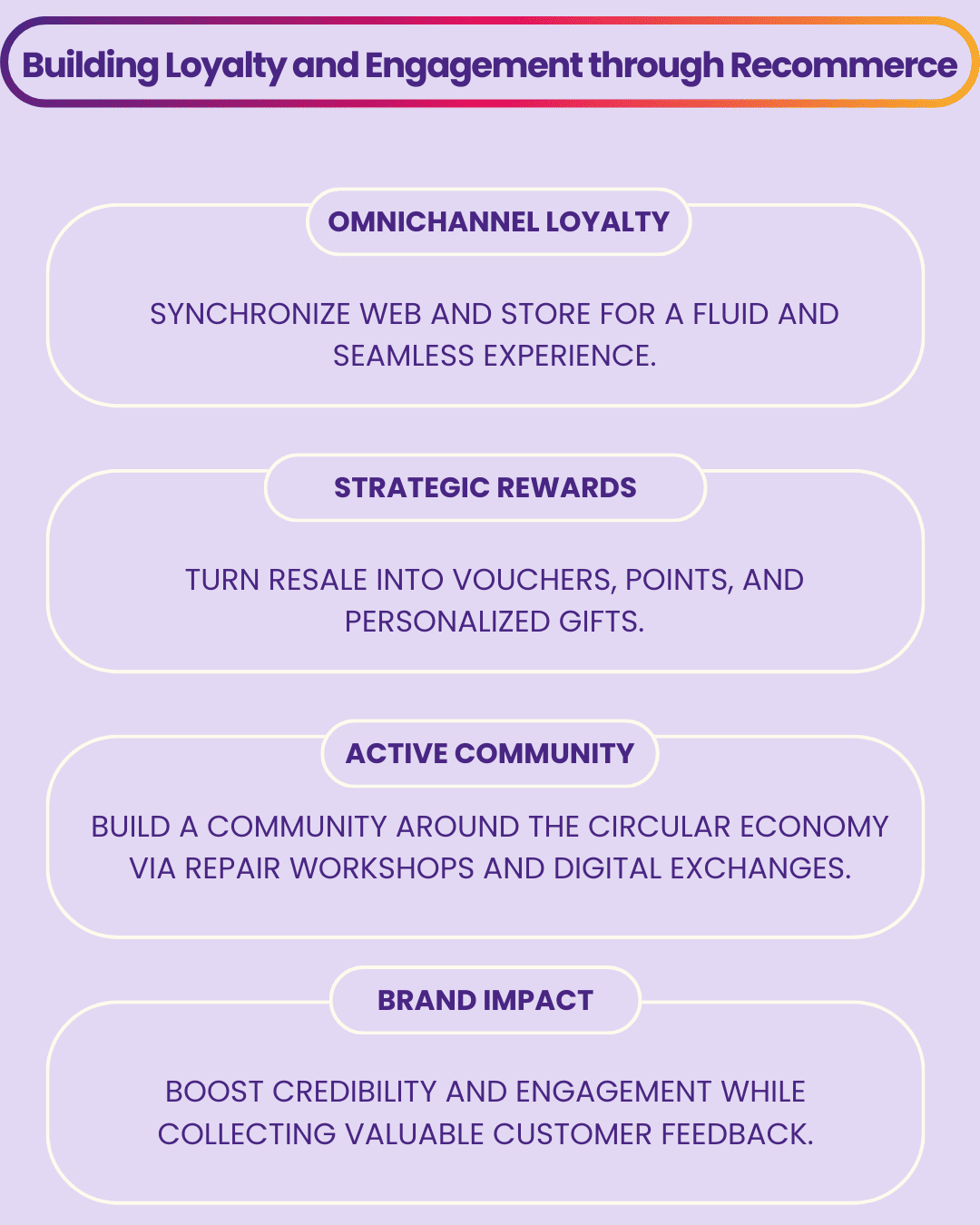
Marketing and communication play a pivotal role in building a community deeply invested in the circular economy. By fostering dialogue and sharing ideas, you can inspire consumers to adopt more sustainable habits while strengthening their sense of connection to your brand.
Digital channels, in particular, provide highly active spaces for discussion and exchange regarding best practices for responsible consumption.
However, why not consider hosting physical events to bring your community together and showcase concrete alternatives? For instance, a Repair workshop open to the public can demonstrate firsthand that it is truly possible to extend a product’s lifespan.
By actively involving your customers in this journey, you can:
- Increase overall consumer engagement.
- Strengthen your brand’s credibility.
- Encourage long-term brand Loyalty.
- Benefit from valuable feedback and innovative ideas to improve your products and services.
One of the primary challenges within the circular economy is shifting consumer mindsets and consumption habits. Consequently, marketing and communication campaigns serve as indispensable levers to educate the public on the positive impacts of ReCommerce.
To communicate the environmental advantages of this approach, several strategies are available to you:
- Launch awareness campaigns highlighting the benefits of recycling, reuse, and repair.
- Share impactful statistics regarding resource waste and the environmental consequences of specific consumption habits.
- Provide practical solutions for adopting more sustainable lifestyles.
To avoid accusations of “green washing,” brands must ensure their communication regarding circular economy initiatives is clear, transparent, and authentic:
- Publish factual data on the environmental footprint of specific products.
- Share updates on achieved progress and future sustainability goals.
- Feature third-party certifications, reports, or independent audits to validate commitments and maintain credibility.
Beyond raw data, storytelling is a compelling engagement tool. By narrating the “life story” of your products from their design and initial lifecycle to their eventual recycling or reuse, you can forge a deep emotional connection with your customers. This effectively reinforces your position as a responsible and sustainable brand.
Chapter 6: Case studies and innovations in Recommerce
1. Success stories from major brands
Case study: Kidkanaï
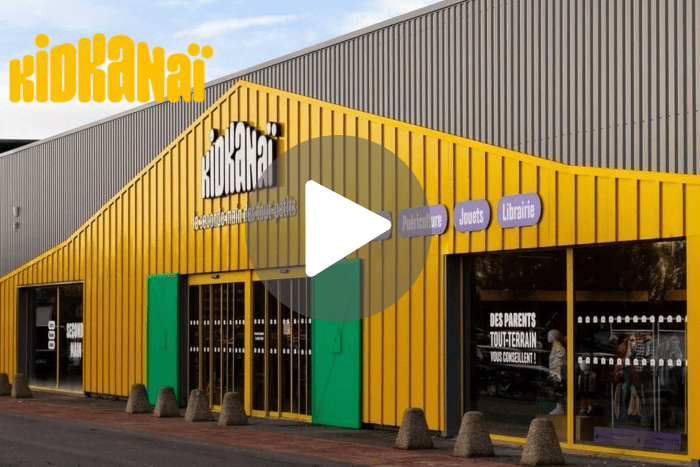
The Kiabi Group successfully integrated Recommerce through Kidkanaï, a concept store dedicated to second-hand goods for children and babies.
The concept? Families can estimate the value of their items in just minutes via a mobile app before dropping them off at the store for resale. Simultaneously, a curated selection of second-hand Kiabi items is available for purchase in-store.
To ensure a fluid customer experience, Kidkanaï implemented fixed, mobile, and dedicated checkouts specifically for second-hand transactions. Another vital project requirement was the deployment of a system capable of managing buybacks from both private individuals and professional suppliers.
The implementation of the Openbravo POS and inventory management solution specifically adapted to Kidkanaï’s unique business model successfully addressed several key challenges within a tight timeframe:
- Integration of the mobile app with the POS software.
- Connection to the Kiabi Group’s accounting interface.
- Comprehensive management of second-hand items.
Building on the success of this Recommerce-driven concept, Kiabi has continued its forward momentum: the retailer has since acquired Beebs, a specialized resale site for children’s second-hand goods.
Second-hand offerings have also found a permanent home within the new Kiabi Village point of sale (POS), inaugurated in 2024. In this flagship location, pre-owned clothing is showcased right alongside aisles of new articles. Additionally, customers can bring their used products into the store and receive vouchers in return.
Case study: Boulanger
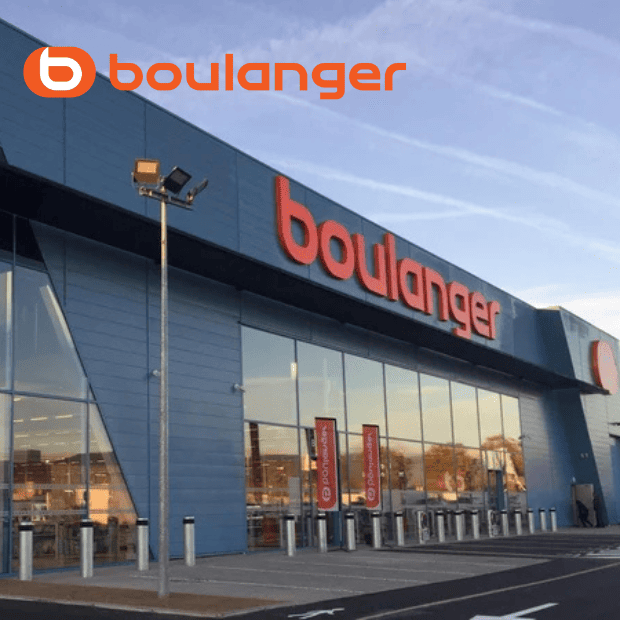
Boulanger, a specialist in household appliances and multimedia, has been committed to a circular economy approach for several years. The brand notably offers repair solutions for a wide range of products, including small and large appliances, televisions, and multimedia devices.
Through its QualiRépar certification, Boulanger provides customers with a discount of up to 20% on the total repair cost. This is a powerful advantage that underscores the brand’s credibility while making the offer economically attractive to consumers.
As part of its “Club Infinity” program, the retailer also offers unlimited repair plans. If a product is deemed irreparable, the customer receives compensation to help them purchase a replacement. Consequently, the repair service serves as a genuine Loyalty driver, perfectly complementing the sale of new items.
In its shift toward Recommerce, the brand has also implemented a trade-in offer where customers can return a product when purchasing a new one, following a resolutely Omnichannel journey:
- The customer estimates the value of their old device on Boulanger’s website or in-store.
- They add the new product to their cart, and the buyback offer is immediately deducted from the total price.
- They then simply finalize the buyback in-store, where a thorough diagnostic is performed to confirm the trade-in value.
Customers who only wish to sell their old device without making a new purchase also have the option to go directly to the store.
Depending on their condition, the traded-in products are either refurbished and resold or recycled for spare parts.
Case study: Decathlon
Aiming to reduce its CO2 emissions by 20% by 2026, the Decathlon Group has established itself as a pioneer in the circular economy, which it has integrated through several distinct models.
This begins with the purchase and resale of second-hand items: customers benefit from an immediate buyback service for sports equipment, available both at the Point of sale (POS) and online. The system is designed to be as simple as it is flexible, as customers can choose between receiving a voucher or a direct bank transfer for their products.
Beyond pre-owned goods, Decathlon has integrated rentals as a strategic lever for transforming its business model. The company offers two distinct solutions:
- Short-term rental, allowing customers to use sports equipment for a few hours, several days, or even a full season. Particularly focused on outdoor activities, this model generated over €17.9 million in 2024 (up from €14 million in 2023).
- Monthly subscription-based rental, which provides customers with greater flexibility for long-term use. This resulted in €18.13 million in revenue in 2024—a staggering 193% increase compared to 2023.
Finally, the retailer is a major player in the repair market with a network of 1,730 in-store Repair workshops, enabling customers to significantly extend the lifespan of their products. The brand also encourages self-repairs by providing a dedicated site for compatible spare parts and instructional tutorials.

The success stories of retail leaders offer several key takeaways.
- Recommerce can serve as a powerful Loyalty driver: for instance, through premium repair services exclusive to Loyalty program members or vouchers issued in exchange for second-hand trade-ins.
- Buying and reselling used goods increases foot traffic at the Point of sale (POS), which often has a positive knock-on effect on new product sales.
- The Decathlon case study illustrates this perfectly: far from being just a green initiative, Recommerce is a value-creating engine in its own right, delivering a tangible impact on total revenue.
On the contrary, their complementarity means they actively fuel one another. For example:
- A Repair workshop can draw visitors to the store and spark purchases, whether for new or second-hand products.
Rental can act as an initial step toward a final purchase, allowing customers to test a product at a lower cost for a period.
Recommerce cannot succeed in isolation.
- It must be integrated into the business operations through a Unified commerce strategy, ensuring that new and second-hand products are no longer managed in silos.
- It must be supported by technological solutions designed to streamline the management of repairs, rentals, and the resale of second-hand items.
The growth of the circular economy is also driven by new technologies that simplify tasks for retailers while unlocking unprecedented opportunities.
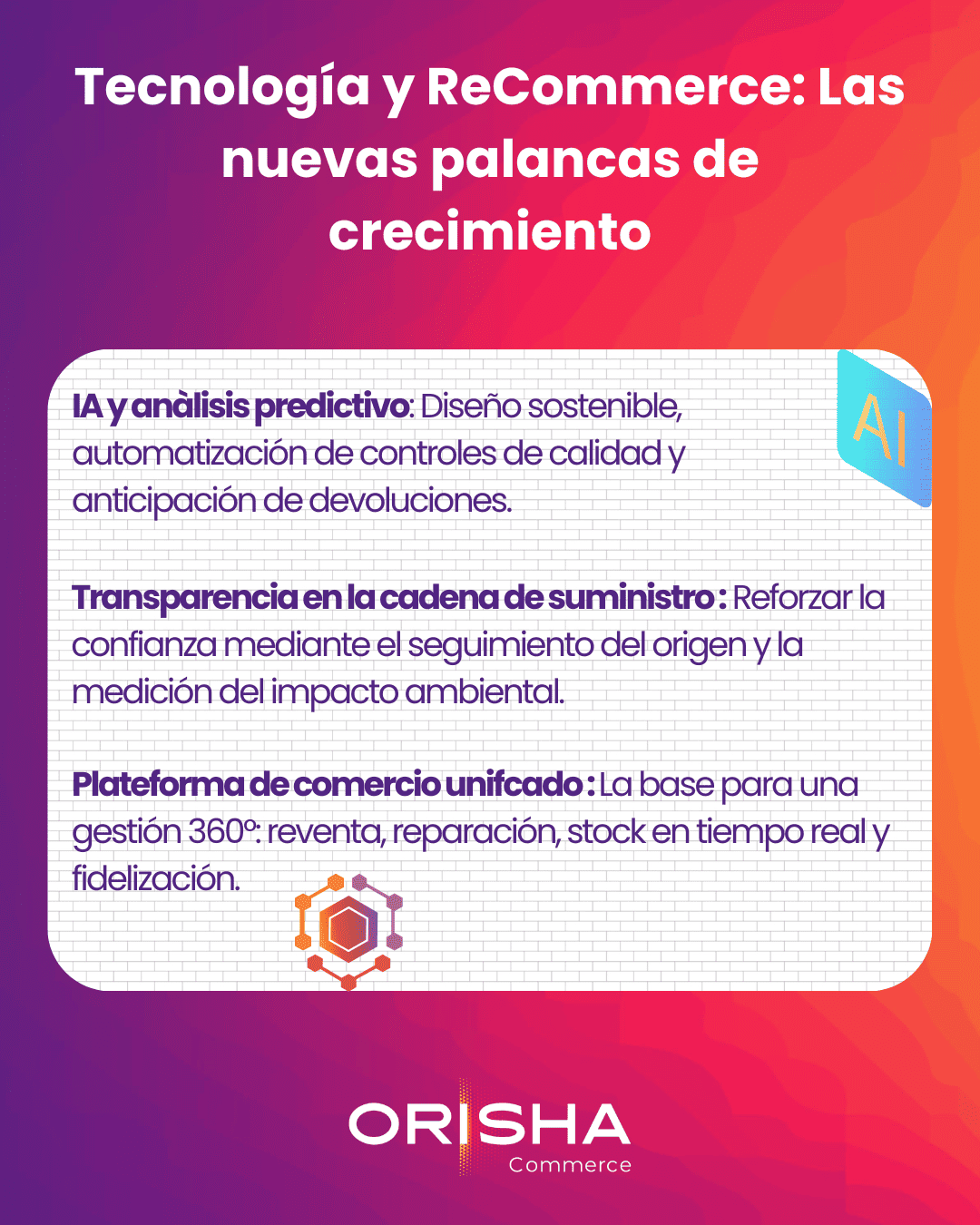
The possibilities offered by Artificial Intelligence, in particular, are vast:
- AI can assist in designing products that are easier to recycle, repair, and resell.
- It facilitates automated return processing, quality control, and customer service.
- Advanced analysis of historical product data and customer behavior could enable the prediction of return probabilities, further smoothing the return management process.
Furthermore, innovations in Supply chain tracking enhance the appeal of Recommerce for consumers. Indeed, they provide greater transparency regarding product origins and allow for a more precise measurement of their environmental impact.
Finally, integrated platforms now offer a straightforward solution for retailers looking to give their products a second life.
A Unified commerce solution serves as the foundation for any Recommerce strategy, featuring 360-degree management capabilities:
- Resale, rental, and repair.
- Loyalty programs.
- Real-time stock visibility.
- Integration of partner solutions.
Chapter 7 : Measuring the impact of Recommerce
To evaluate the effectiveness of a Recommerce strategy, retailers must rely on Key Performance Indicators (KPIs) that balance commercial results, Customer experience, and environmental impact. While there are countless possible metrics, here is a selection of essential indicators to track:
One of the most frequently used indicators for measuring progress in the circular economy is the recycling and waste recovery rate. This simple yet effective metric assesses the proportion of waste diverted from landfills or incinerators and reintroduced into production cycles.
However, more comprehensive tools can be utilized to evaluate the overall environmental impact of a product or service across its entire lifecycle, from raw material extraction to its eventual end-of-life.
Consequently, Life Cycle Assessment (LCA) has become an essential tool for companies aiming to reduce their ecological footprint. By quantifying various impacts (such as greenhouse gas emissions, water consumption, and pollution) at every stage of the lifecycle, retailers can identify critical areas for priority improvement.
Many businesses go even further by calculating the total environmental footprint of their entire operations, including indirect impacts associated with their Supply chain or the way consumers use their products.
3. Adjusting and optimizing strategy in a changing market
The ReCommerce market is experiencing rapid growth, necessitating careful monitoring of consumer trends, technological innovations, and environmental challenges. New needs are constantly emerging:
- Subscription-based rentals are expanding across numerous sectors, such as ready-to-wear fashion.
- Personalized shopping experiences are now expected even for second-hand goods. Through AI, it is possible to provide intelligent recommendations for refurbished items tailored to individual customer preferences.
- New technologies are increasingly enriching the Customer experience, such as Augmented Reality (AR), which allows customers to visualize a refurbished product before purchasing it.
Since these new models are inherently evolutionary, they require an iterative and agile approach. For instance, conducting a pilot test in-store before a full-scale rollout allows for the identification of value-creation opportunities while minimizing operational risks.
In parallel, analyzing Key Performance Indicators (KPIs) is a vital tool for tracking your progress, adjusting your strategy, and making the best long-term decisions.

Conclusion: toward more sustainable, responsible, and profitable ret
From Decathlon to Kiabi, Fnac, and Boulanger, major brands are leading the charge in developing the circular economy.
Far from being a mere “green” image tactic, Recommerce is a genuine growth lever for retailers:
- It generates additional value.
- It supports new product sales.
- It builds Loyalty among consumers seeking responsible consumption.
- Increased regulation: Governments are likely to adopt stricter laws regarding waste management and recycling.
- Widespread adoption: Circular practices will become the standard within the retail industry.
- Consumer-driven change: In light of environmental challenges, shoppers will continue to demand more sustainable alternatives.
The share of refurbished products is growing rapidly across the retail sector, particularly in high-tech goods, household appliances, and sporting equipment.
From a consumer perspective, traditional barriers are dissolving: when sold by a reputable brand and backed by reliable warranties, second-hand products provide the reassurance needed to attract an increasingly broad audience.
The true challenge now lies in expanding and sustaining the supply to ensure the circular economy becomes a permanent fixture. The good news is that this booming market is filled with opportunities for retailers and brands that are prepared to seize them.
Summary: key steps for a successful Recommerce project
FAQ
What is Recommerce in retail?
Recommerce refers to the practices of reselling, renting, trading in, or repairing used products. In retail, this means integrating circular economy scenarios into a brand’s offering to extend product life and generate new revenue streams.
What is the difference between second-hand and Recommerce?
Second-hand refers specifically to the buying and selling of used items. Recommerce is a broader term that encompasses all circular models: resale, rental, repair, and recycling, integrated directly into a brand’s retail strategy.
What are the economic models of Recommerce?
The main models include: Resale (second-hand), Rental (fashion, sports), Trade-in (vouchers for old products), and Repair/Refurbishment. These can be combined to maximize profitability.
Which software facilitates Recommerce?
Success requires tools capable of managing:
- Stocks and returns (WMS, OMS).
- Multichannel transactions (POS software, Mobile POS).
- Customer and product data (CRM, ERP).
Integration with resale or rental platforms.
Orisha’s Unified Commerce solutions orchestrate these scenarios seamlessly.
How is Recommerce profitability measured?
Profitability is measured via KPIs such as: revenue share from Recommerce, net margin per scenario, customer Loyalty rates, and environmental impact (avoided emissions).
Discover our products tailored for ReCommerce
Orisha Commerce supports you with powerful and scalable SaaS solutions, tailored for ReCommerce.
Openbravo Repair and Workshop
Boost customer satisfaction and enhance your circular offering by integrating product repair services.
Openbravo POS
Transform your stores into true unified commerce hubs, providing an optimal shopping experience for both customers and employees.
Openbravo SSMS
Optimize store inventory management: reduce costs, limit stockouts, and simplify order fulfillment.
Openbravo Commerce Central
Efficiently manage your loyalty programs, pricing, promotions, and procurement, while benefiting from a unified view of customers, sales, and inventory across all your channels.
Core-Suite
A comprehensive suite for B2C and B2B commerce, seamlessly and transparently integrating sales, inventory management, and procurement.
Ressources complémentaires
- Managing second-hand in-store: the success of the Kidkanaï concept store (Webinar)
- The future of unified commerce: harnessing the power of SaaS (Webinar)
-
-
Orisha Commerce works alongside retail companies to simplify the management of second-hand resale, repairs, and rentals.
Our innovative ReCommerce tools pave the way for new growth opportunities, while supporting a sustainable consumption approach.
-
Develop new revenue streams by exploring untapped market segments and attracting a more diverse customer base.
-
Extend the lifespan of your products by offering your customers the chance to exchange or purchase refurbished items, thereby strengthening your relationship with them.
-
Attract price-conscious customers with a range of products that are more affordable than new items.
-
Enhance your brand image by focusing on reuse and recycling, asserting your position as a responsible and environmentally friendly company.