

Shoppable video and live commerce: the engine of impulse buying in retail
The retail industry is undergoing a revolution centered on the elimination of friction. Why are live commerce and shoppable videos exploding in popularity? Because they target the most precious resource of the digital age: your attention. From Sézane to Fnac, retail giants have mastered the art of converting a video feed into an instantaneous transaction. Here is an analysis of a formidable strategy that hacks psychological triggers to boost direct sales.
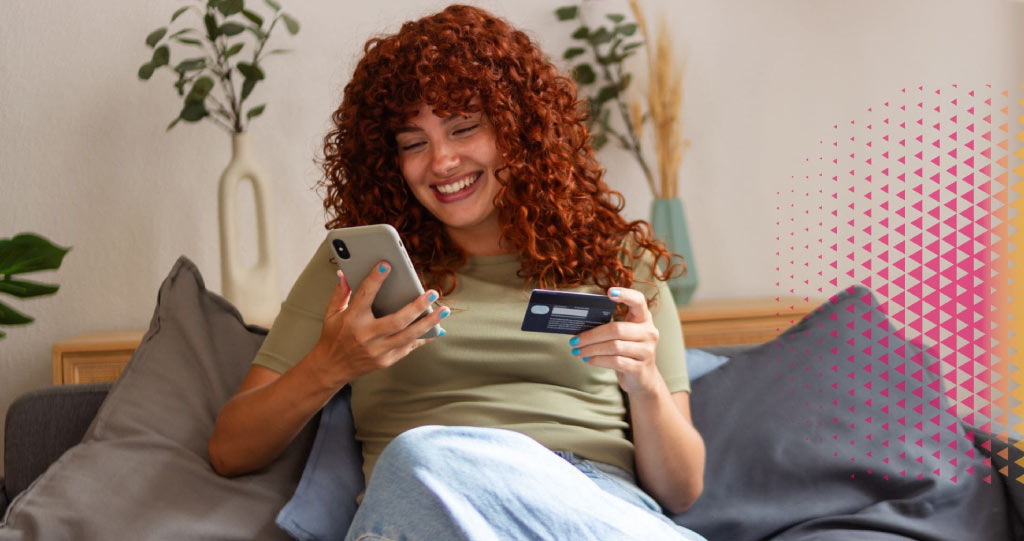
Picture yourself on your couch, nonchalantly scrolling through Instagram or TikTok. You spot an outfit, a kitchen gadget, or a beauty product suddenly, you see it and you want it. Three clicks later, without ever leaving the app, the order is placed.
This impulse purchase was neither accidental nor unplanned. If the experience feels so fluid, almost magical, it’s because it was meticulously engineered to be a seamless experience. Well-oiled strategies are at work behind the scenes to minimize the reflection time between a “like” and a “buy.”
This phenomenon is driven by two main pillars: shoppable video and live commerce. The former transforms any video into an interactive storefront where every product is clickable. The latter is essentially a modern-day take on home shopping, utilizing a sense of urgency and community to trigger direct sales on your smartphone.
Together, these tools serve as the engines of the “scroll economy” a system where your scrolling thumb becomes the primary target for retailers. But how exactly do these mechanisms work, and what is the psychology behind them?
What is a shoppable video? The technology that turns a “Like” into an “Add to cart”
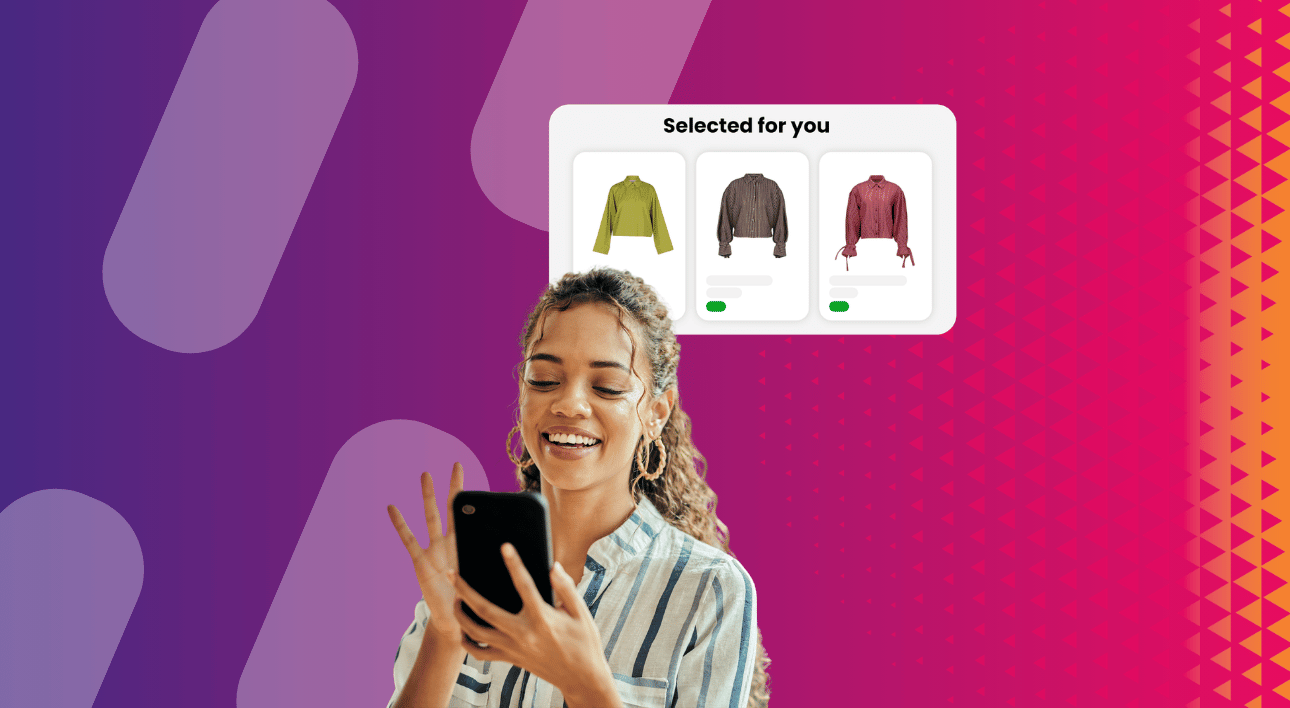
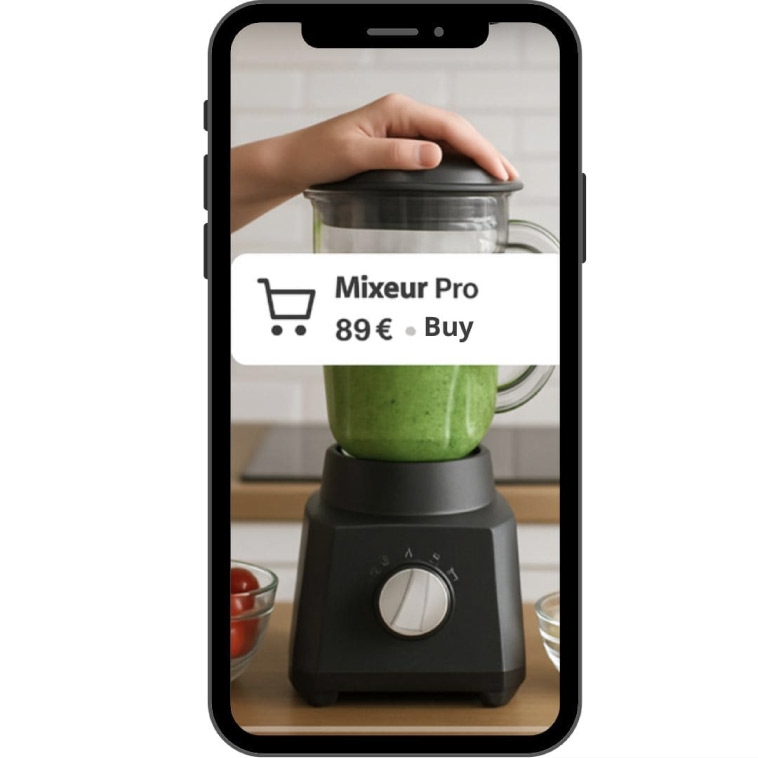
What exactly is a shoppable video? It is the technology that turns a “like” into an “add to cart.” Have you ever watched a home decor video or a cooking tutorial and wondered, “Where can I find that lamp?” or “What brand is that mixer?” Shoppable video was created specifically to answer those questions. It is an interactive format that allows you to click directly on the items featured on screen. Instead of being a passive spectator, you interact with the content, effectively turning a video into a living product catalog.
You have likely encountered this technology on your favorite social platforms. On Instagram or TikTok, it appears as a small shopping bag icon or a product name subtly displayed on screen. With a single tap, the product details appear complete with pricing and an “Add to Cart” button all without ever exiting the app. The days of hunting for a “link in bio” or performing vague Google searches are over; the purchase happens right here, right now.
The logic behind this innovation is incredibly straightforward: to remove all friction meaning any obstacles between seeing a product and buying it. By making the omnichannel journey near-instantaneous, brands capture the consumer’s emotional peak. That fleeting “must-have” feeling is immediately converted into a transaction. However, this technology becomes even more potent when you add the energy and interactivity of a live broadcast a phenomenon known as live commerce.
Live commerce: when home shopping meets your smartphone in real time
Live commerce: when home shopping meets your smartphone. Now, imagine that this shoppable video isn’t pre-recorded, but broadcast live. You aren’t watching alone; hundreds or even thousands of others are tuned in simultaneously while a host, often an influencer or brand expert presents products in real time. This is live commerce. Think of the TV shopping channels of the past, but infused with the interactivity and immediacy of an Instagram or TikTok Live.
The defining difference is the interaction. Unlike a traditional e-commerce product page where information is static, live shopping allows you to ask questions and receive instant feedback. “Does this dress run large?” “How is the sound quality on this speaker?” The host can read your comment and respond on camera, trying on the garment or demonstrating the product. This live dialogue resolves doubts and builds a level of trust that a simple photo could never achieve.
This approach radically shifts how we perceive online shopping. Live shopping is often viewed as more authentic and transparent than traditional e-commerce. The minor unpredictability of a live broadcast, the personal tone of the host, and the ability to see the product from every angle create an immersive customer experience. It feels less like a sales pitch and more like receiving a personalized recommendation very much like an assisted sale in a physical store.
The result is a powerful cocktail that blends the convenience of online shopping with social engagement and expert salesmanship. However, this apparent authenticity also hides formidable psychological mechanisms designed to accelerate your buying decision even further.
“Only 5 left in stock!”: how live shopping hacks your brain to trigger a purchase
These flash promotions are more than just good deals; they are the key to the psychology of impulse buying. The live commerce environment is carefully orchestrated to bypass your typical reflection time. The goal is to move from emotion to action in seconds, leveraging well-known human instincts. To achieve this, brands primarily activate two powerful psychological levers.
Rather than analyzing a product page in isolation, you are immersed in a fast-paced collective atmosphere. Two specific triggers are designed to make you click “buy” before you’ve even weighed the pros and cons:
- Urgency and Scarcity (FOMO): The “Fear Of Missing Out” is a powerful motivator. Phrases like “Offer valid only during this live,” “Limited stock!” or “Free gift for the first 10 buyers” create a high-pressure environment. Your brain interprets this as a potential loss, pushing you to act quickly to avoid missing the opportunity.
- Social Proof: Seeing others take action reinforces our own choices. During a live session, this is omnipresent: the stream of positive comments, notifications stating “Anna just bought this item,” and the host reading enthusiastic reactions all create collective validation. If hundreds of others are buying, the product must be worth it, right?
These two forces combined form a potent mix. Time pressure prevents analytical thinking, while the enthusiasm of the group reassures you of the validity of your impulse. But for this engine to run at full speed, one essential ingredient is needed: trust. This is where the host’s role becomes crucial, especially when they are an influencer you already follow and admire.
Is the salesperson your friend? The pivotal role of influencers in social commerce
Is the salesperson your friend? The pivotal role of influencers in social commerce. Beyond peer pressure and time constraints, the factor that often tips the scales is the person holding the product. It is no longer an anonymous clerk, but a content creator you may have followed for months. Unlike a traditional ad that you simply endure, you have “invited” this influencer into your daily life via your feed. They aren’t just part of an advertisement; they have become part of your social circle.
This sense of proximity is by design. It is the result of a strategy where influencers share snippets of their lives to build familiarity and trust. By seeing them in personal contexts, our brains stop perceiving them as mere advertisers. Consequently, their recommendation carries the weight of a friend’s advice someone we believe would never suggest a product they don’t truly like. This is the ultimate power of influencer marketing: disguising a commercial message as a personal secret.
This trust, built on carefully staged authenticity, has become the “black gold” of social commerce. It allows brands to bypass our natural skepticism toward traditional advertising. Buying no longer feels like a transaction, but rather the culmination of a helpful tip. Online commerce now relies on this alchemy: transforming a perceived personal relationship into a powerful sales lever. Brands from tech giants to everyday fashion labels have understood this perfectly.
From Sézane to Fnac: the brands you know are already leveraging live shopping
From Sézane to Fnac: the brands you know are already leveraging live shopping. Far from being a niche gimmick for small boutiques, live shopping is a core strategy adopted by France’s largest retailers. For instance, the wildly popular fashion brand Sézane uses it to unveil new collections. During these broadcasts, garments are worn and discussed in a private-viewing atmosphere, allowing viewers to buy what they see instantly. The event expertly converts desire into an impulse purchase through exclusivity and immediacy.
This method extends far beyond the fashion world. Retail giants like Fnac have also embraced it to sell high-tech products. The principle is simple yet devastatingly effective: during a live session, an expert demonstrates the latest smartphone or laptop, answers viewer questions, and often offers an event-exclusive promotion. This recreates the in-store expert advice in an online format that is far more dynamic and interactive.
From “must-have” dresses to electronic gadgets, these real-world examples prove that the future of retail is already here. The brands you visit are no longer just trying to catch your eye in a shop window or on a poster; they are fighting for your attention at the exact moment you are most available when you are scrolling through your screen.
The scroll economy: why your attention is worth its weight in gold
The scroll economy: why your attention is worth its weight in gold. This fierce competition for our focus is the engine driving the scroll economy. Imagine social media as a vast, infinite shopping mall in your pocket, where every video and photo is a potential storefront. In this universe, the most valuable currency isn’t money it’s your time. Brands no longer just want you to like a product; they want to stop your thumb for those few critical seconds required to spark an immediate desire.
To turn this desire into a transaction, businesses have one primary enemy: friction. Consider online shopping from just a few years ago: you had to exit the app, open a browser, find the product, create an account, enter your address, and then find your credit card. Every step was an opportunity to think twice and, potentially, abandon the cart. Today, the goal is to create a frictionless purchase a path so short and simple between seeing and paying that the act becomes almost instinctive.
This is exactly where shoppable video and live commerce come into play. They are not merely gadgets, but precision tools for eliminating barriers. By allowing you to click and buy directly from the content you are enjoying, they reduce the buying process to one or two taps on the screen. A journey that once took several minutes is now compressed into a matter of seconds.
The result? Buying is no longer a carefully considered decision, but an impulse dictated by the emotion of the moment. By removing the “buffer time” required for reasoning, this economy fosters instant attraction. Understanding this mechanism is the essential first step toward reclaiming control over your decision-making process.
Reclaiming control: 3 questions to ask before clicking “Buy”
Reclaiming control: 3 questions to ask before clicking “Buy.” Before reading this, that impulsive click on a video might have seemed magical, almost instinctive. Now you know there is no magic involved only a well-oiled machine. From clickable videos to live commerce, every element is designed to convert your attention into a transaction. You are no longer just watching a video; you are decoding an intention.
This newfound clarity is your best asset for taking back the power. To stop being a passive subject of the scroll economy and start mastering its codes, adopt a simple reflex before every “must-have” purchase. Think of this short checklist as a conscious pause to keep impulse buying in check.
Your Anti-Impulse Buying Checklist:
- Did I need this before seeing this video or live session?
- Am I being influenced by a time-limited promotion or the general hype of the crowd?
- Can I wait 24 hours before making my final decision?
Asking these three questions doesn’t stop you from buying, but it ensures that the choice is truly yours. By becoming an informed consumer, you transform your online journey: you are no longer just a target, but a conscious player in the digital ecosystem.
FAQ
What is a shoppable video in practice?
It is an interactive video that turns your screen into a digital storefront. Unlike a traditional ad, every product is clickable, allowing users to view prices and add items to their cart directly within the app without interrupting their browsing.
How does live commerce trigger immediate purchases?
It relies on two psychological levers:
–FOMO (the fear of missing out on time-sensitive offers)
-Social Proof (live interactions and seeing others buy, which provides instant validation).
Why are influencers more effective than traditional sales associates?
Influencers benefit from a sense of likability and trust built over time. Their advice isn’t perceived as a cold sales pitch, but as a helpful recommendation from a virtual “friend,” which disarms a consumer’s natural skepticism.
What is the "scroll economy" and the concept of friction?
The scroll economy is the battle to capture a user’s attention while they browse social feeds. To succeed, brands eliminate “friction” any unnecessary steps like leaving an app or creating a new account so the path from desire to payment takes only seconds.
Which French brands are already using these methods?
Popular examples include Sézane, which uses live sessions to unveil new fashion collections, and Fnac, which recreates the in-store expert experience through interactive high-tech demonstrations.