Skip to content

Tweakwise: collective intelligence for predictive discovery and limitless relevance
5 min
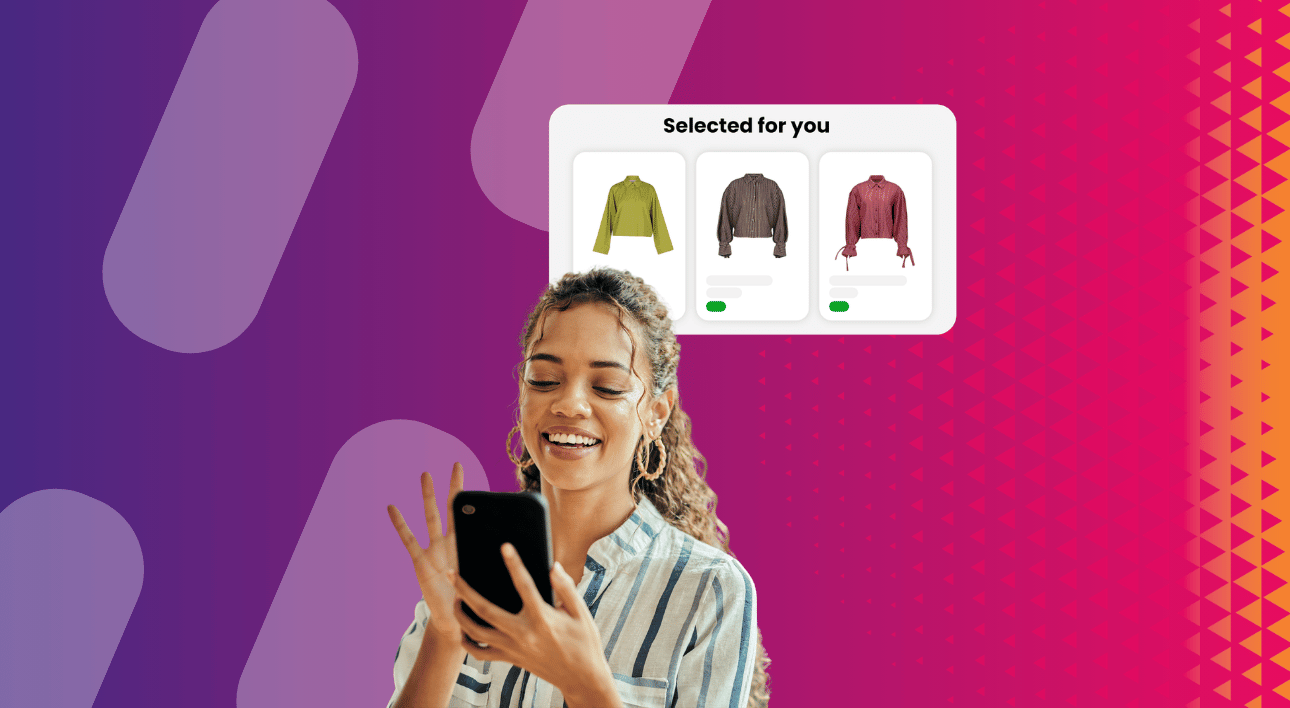
Mobile interface showing "People like you also bought" recommendations for unified commerce.

Every expert responsible for relevance within an e-commerce ecosystem recognizes a classic pattern: product recommendations all too often rely on just two pillars — the history of an individual visitor or global sales trends.


While logical, these two approaches have major structural limitations. Individual behavior is often too fragmentary or still being defined during the session, while global popularity fails to reflect actual personal preferences. In practice, this results in recommendation blocks that are either far too restrictive or overly generic.


Consequently, many recommendation modules do not reach their full performance potential. They settle for simply validating what the user already knows, failing to stimulate a genuine discovery of products that the customer has not yet identified on their own.

CHATBOT IA

REDUCTEUR MOTEUR IA

Why individual behavior is not enough for hyper-personalization

Personalization based solely on individual behavior is valuable, but it remains incomplete, especially at the start of a session where the lack of context is glaring. The visitor browses, compares options, and is still in an exploratory phase.


At this stage, actions suggest a general direction without confirming a firm preference. Someone viewing several pairs of athletic shoes may have very different intentions: long-distance running, daily use, or specific gym training.


Furthermore, the customer journey is not linear: visitors explore broadly and compare various categories. If recommendations remain limited to this single individual trajectory, they overlook a major part of the actual purchase intent.

The transition from traditional personalization to collective intelligence

The evolution of personalization does not lie in adding complex manual rules or increasingly granular segmentation, as this approach quickly becomes operationally unmanageable.


The real technological shift lies in leveraging large-scale data models. The challenge is no longer about observing a visitor in isolation, but about harnessing the behavior of groups with similar profiles.


Browsing habits are rarely unique; powerful patterns emerge from large datasets, such as product combinations viewed together or paths that systematically lead to conversion within groups with comparable intentions.


This is the core of the collective intelligence integrated into Tweakwise. Instead of learning from isolated signals, the system capitalizes on behavioral overlaps. Personalization thus becomes predictive discovery: it does not just react; it anticipates what will likely become relevant.

Social recommendations transform the shopping experience

From this logic comes a new way of recommending products through the “People Like You” feature.


“People Like You” uses the behavior of “twin profiles” as its starting point. The system analyzes which products are viewed and purchased by people following a comparable path, then leverages this overlap to generate ultra-targeted suggestions.


This creates a third performance lever alongside traditional forms of personalization:


  • Just for You: based on the individual journey.
  • Because You Viewed This: based on the immediate context.
  • People Like You: based on the power of collective intelligence.


The major difference lies in the depth of the insight: while reactive methods are limited to current actions, collective behavior brings a learning and strategic dimension to the process.

A concrete example of collective behavior in retail

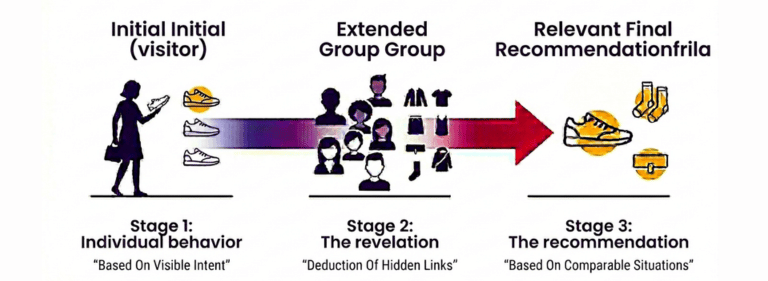
Imagine a visitor browsing athletic shoes within a certain price range. Based on individual behavior, the system stays close to that specific selection; based on popularity, the general best-sellers appear.


However, by observing the data of similar visitors via Tweakwise, a different perspective emerges. We often discover that these profiles eventually choose a specific model outside the initial selection, or systematically complete their purchase with a specific accessory.


These are connections that are invisible at the scale of a single session, but become glaringly obvious when analyzing a wider group of users. By leveraging these patterns, recommendations rely less on what the user explicitly shows and lean more on what proves statistically effective in analogous situations.

Conversion rate optimization relies on creating a seamless experience that bridges the gap between physical and digital channels.

Why predictive discovery is the key to your conversion

The value of this approach lies first in the precision of the relevance, with recommendations aligning precisely with the visitor’s current phase and direction.


But the impact is deeper: by identifying links beyond direct behavior, the system actively stimulates discovery. Customers gain faster access to products they had not yet identified themselves. This encourages natural cross-selling and streamlines the purchase decision process. Efficiency does not come from the quantity of offers displayed, but from the quality of exposure relative to the underlying real need.


It is important to view this as a strategic lever rather than a guaranteed result, as the impact depends on your Assortment management and traffic. However, the direction is clear: high-quality signals lead to more profitable choices.

The role of collective intelligence in a unified commerce strategy

Collective intelligence does not replace other forms of personalization; it adds an indispensable additional layer to them. Individual behavior remains vital for the final refinement, just as contextual recommendations retain their value on a specific page.


“People Like You” completes this ecosystem with insights that would otherwise remain invisible, highlighting patterns that are undetectable at the scale of a single user. It is precisely within this combination that robust personalization for unified commerce emerges, bringing together multiple perspectives for a superior customer experience.

What “People Like You” means for your e-commerce teams

Adopting this engine significantly reduces dependence on manual management. Instead of maintaining tedious rules, the system learns from behavioral patterns, improving relevance without adding technical complexity.


Furthermore, personalization finally becomes scalable: the densification of data strengthens the patterns, allowing recommendations to better match different intentions within the Omnichannel journey.


Finally, this offers a concrete vision of the reality of your visitors. Your teams work less on hypotheses and more on proven models, leading to clearer decisions and a surgical optimization of performance.

15%

Guaranteed increase in baseline conversion rate

Ensuring core performance

80%

Increased add-to-cart rates

Driving higher customer engagement